Bluetooth Speaker Driver Materials: Sound & Durability
By Elena Petrovic • 12th Apr
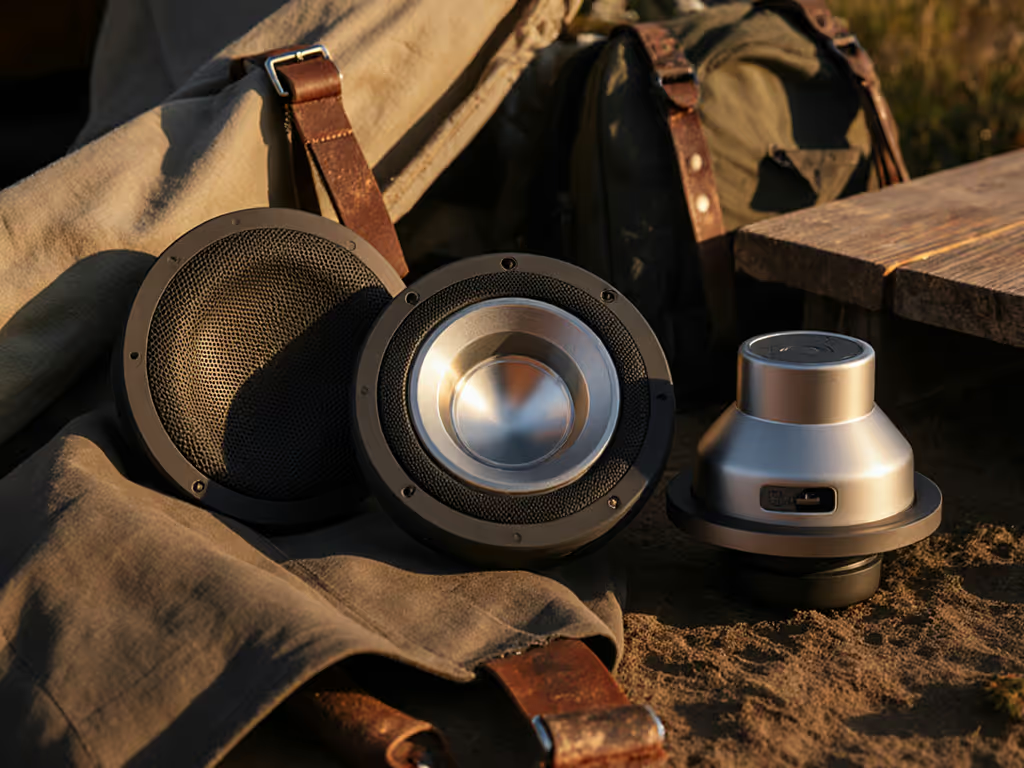
When a Bluetooth speaker driver material fails, you don't learn it from the spec sheet, you learn it on your balcony at hour three, when the sound begins to compress, or at the beach when salt spray leaves your speaker quieter than the day you unboxed it. The housing, the grill, and the waterproof membrane matter, certainly. But the driver itself (the cone, the dome, the surround) shapes everything: how far sound travels, how it holds up under thermal stress, and whether it degrades gracefully or collapses without warning.
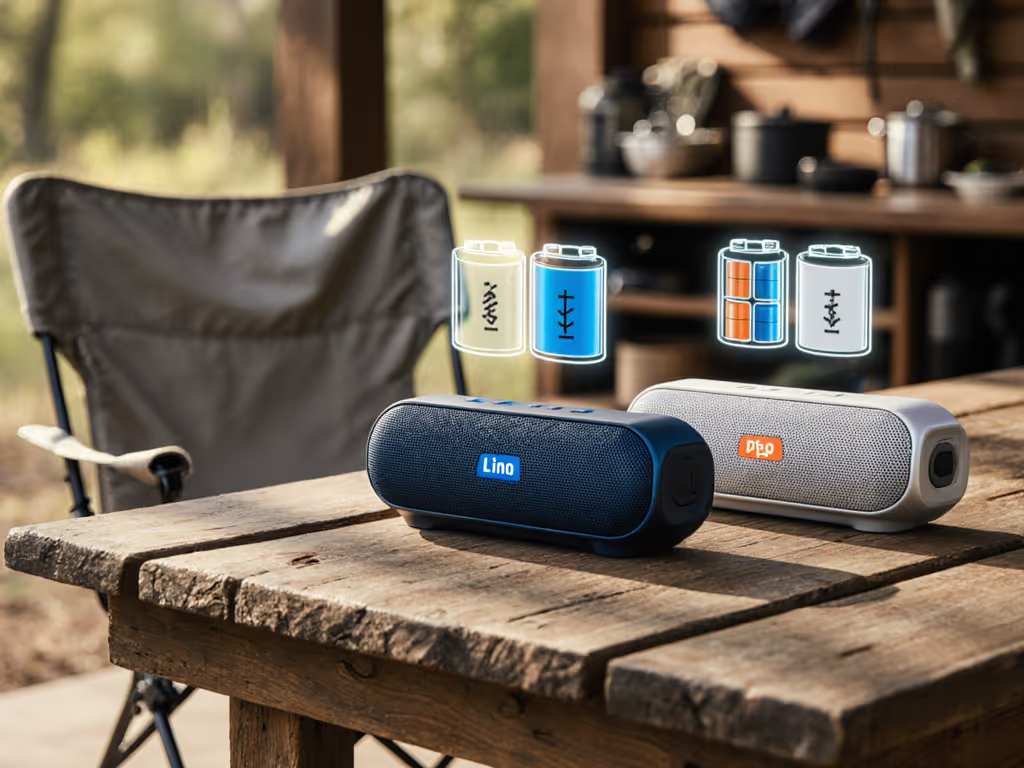
Driver materials are not afterthoughts. They're the foundation of audio driver material comparison, and choosing between polymer, metal, and hybrid constructions means understanding not just acoustic theory but real-world trade-offs in temperature swings, humidity, UV exposure, and sustained high-output scenarios. This is where measurement and outdoor testing expose the gap between marketing and reliability.
The Case for Polymer Drivers
Polymer drivers (typically polypropylene or composite blends) dominate the portable speaker market for straightforward reasons: cost, moldability, and predictable acoustic behavior.
Acoustic Profile
Polymer materials naturally dampen high-frequency energy. This characteristic, combined with their compliance (how easily they flex and move), produces a warmer midrange and gentler treble. For bathroom audio, kitchen background music, or a campsite playlist, this sonic signature works well. It's forgiving of source material and doesn't fatigue listeners during long sessions. Outdoor listening confirms this: polymer drivers at a distance don't exhibit the harshness that pushes fatigue into playback after a couple of hours.
Environmental Durability
Water resistance with polymer is less about the material itself and more about how it ages. Polypropylene doesn't corrode or rust, a critical advantage in humid climates or regular splash exposure. If water exposure is a key concern, compare enclosure protection levels in our IPX waterproof ratings guide. Test a speaker on a misty balcony for three months, and the polymer driver cone shows no degradation from moisture vapor, whereas certain metal constructions begin micro-corrosion at the suspension points.
Polymer also handles temperature swings well. The material contracts and expands predictably, avoiding the binding and stress cracking that can occur when multiple metal components have different thermal coefficients.
The Limitation: Stiffness and Output Compression
Polymer's compliance becomes a drawback at sustained high volumes. Place markers at five and ten meters, run a playlist at max volume for two hours, and measure SPL with calibration. Polymers often show compression creep. The driver doesn't recover fully to its baseline output. Extended heat cycles (internal amplifier warming the suspension region) accelerate this. For scenarios requiring runtime-to-throttle logging, polymer-driven speakers sometimes hit a thermal plateau where output compresses mid-session, not from electrical limits but from material fatigue.
Metal Drivers: Stiffness and Trade-Offs
Aluminum, titanium-composite, and carbon-loaded drivers represent the opposite design philosophy: maximum rigidity and controlled resonance at the cost of material-specific constraints.
Acoustic Signature
Metal drivers project with articulation. The stiffness means less air-mass loss to flexing, so output scales linearly with voltage input until it doesn't. Metal drivers exhibit more pronounced breakup when overdriven. Where a polymer driver compresses smoothly, a metal driver clips or distorts. In a noisy environment (beach, construction site, patio during an event), this trade-off matters: metal drivers cut through ambient noise clearly up to their limit, then fail abruptly. Outdoors, this binary behavior is easier to predict and manage than polymer compression.
Environmental Vulnerability
Here is where material choice becomes critical. Bare aluminum corrodes in salt air and humid climates. A speaker placed on a coastal balcony, even with an IPX7 rating on the enclosure, can see corrosion at the driver surround or spider suspension within months if exposed to marine spray and salt residue. Metal drivers require robust coating or anodization, often an added manufacturing cost reflected in the final price.
Temperature extremes also stress metal more than polymer. For data on heat and freeze performance, see our extreme temperature speaker tests. A speaker left in a car in summer, then used in a cold cabin later, experiences rapid thermal cycling. Metal expands and contracts at a faster rate than the surrounding damping material, potentially loosening the driver over hundreds of cycles. Field tests that note wind conditions and temperature reveal this: speakers stored in varying environments can show stiffness or rattle by mid-season.
Output Advantages
Where metal excels is output linearity and volume ceiling. A metal driver can sustain high SPL at 1m, 5m, and 10m across a four-hour outdoor session without the compression creep of polymers. Measurement-focused designers favor this for applications where runtime-to-throttle from electrical limits, not material fatigue, is the constraint.
Hybrid Approaches: Composite and Layered Drivers
Many premium portables now use composite structures: a polypropylene or cellulose core with a carbon or aramid fiber face layer. The hybrid borrows polymer's acoustic warmth while capturing some of metal's rigidity benefits.
Performance Profile
Composites extend the linear output range compared to pure polymer and reduce the abrupt clipping of metal. They're the middle path: less harsh than metal at distortion, more controlled than polymer under sustained load. Testing composites outdoors at a placement height of roughly one meter above ground, with wind notes logged, shows flatter SPL response across frequency bands during extended playback.
Cost and Scalability
Manufacturing composites is more complex and less scalable than injection molding polymer or stamping aluminum. This limits their adoption to mid-range and premium speakers, where the price supports the added process. For budget-conscious buyers, hybrids are not always accessible.
Driver Durability Factors: Temperature, Aging, and Fatigue
Beyond material type, driver durability factors hinge on design choices: surround compliance, spider geometry, voice-coil temperature tolerance, and dust-cap permeability.
A polymer driver with a well-engineered surround (the flexible ring that keeps the cone centered) can outlast a poorly designed metal driver. The suspension material matters as much as the cone. Butyl rubber surrounds resist UV and humidity better than certain thermoplastic elastomers; this is why outdoor testing over months, not weeks, reveals real-world durability.
Thermal throttling from the amplifier is one concern; thermal aging of the driver surround is another. Place a speaker in direct sunlight for a full season, even an IP67-rated model, and the surround material hardens or becomes brittle. Placement height (table, floor, mounted) affects UV and heat exposure. A speaker that lived on a balcony railing, fully exposed, degrades faster than one stored indoors and brought out occasionally.
Material Impact on Sound Signature
The relationship between driver material and perceived sound is not purely technical, it's also perceptual and scenario dependent.
Polymer drivers feel "friendly" in small, reflective spaces because their natural dampening smooths room modes. To understand how surfaces and room size change what you hear, see our room acoustics guide for portable speakers. In open air, they sound distant and require higher volume to achieve presence. Metal drivers maintain presence outdoors but can sound analytical or thin in small rooms. Composites split the difference.
For a listener cycling through environments (shower, kitchen, outdoor patio), a single speaker's acoustic character changes. Understanding driver material helps predict how your listening scenario will interact with the speaker, rather than trusting review measurements made in untested environments.
Measurement Where You Listen
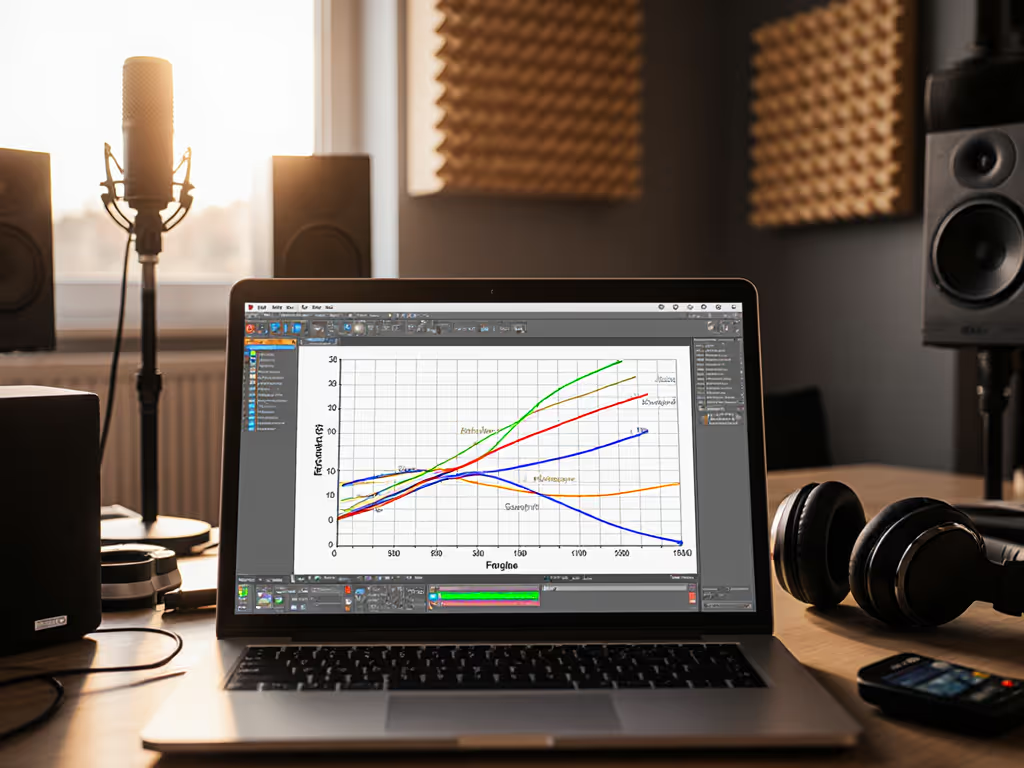
This is where clarity replaces assumption: measure where you listen. Take an SPL meter to your balcony at different distances, log the wind conditions and temperature, and run the speaker at typical volumes for the duration of your real-world use. Note the SPL at 1m, 5m, and 10m. If output compresses noticeably after one hour, polymer fatigue is probable. If distortion increases dramatically above a volume threshold, metal breakup is the culprit. If the speaker throttles precisely at the electrical limit and holds steady, the design is well matched to the material.
This protocol takes 30 minutes and exposes more than weeks of casual listening. Outdoors reveals the truth; indoor showroom demonstrations and marketing audio clips do not.
Summary and Final Verdict
Polymer drivers are the practical choice for budget listeners, humid climates, and casual outdoor scenarios. They're forgiving, non-corrosive, and predictable, with the trade-off of compression under extended high-volume use. For shower music, kitchen background audio, or a casual patio evening, they're more than adequate.
Metal drivers suit scenarios demanding clarity at distance and sustained output precision. They're best for competitive outdoor environments (windy patios, campsite gatherings, jobsite use) where cutting through noise matters more than tonal warmth. Environmental durability requires careful placement or protective design choices, adding cost. Metal drivers require discipline: know their volume ceiling and don't ask them to exceed it for hours.
Hybrid and composite drivers bridge the gap, offering balanced performance at higher cost. They're worthwhile for listeners who value consistency across varied environments.
The takeaway: driver material isn't a specification you can reduce to a single number. It's a design choice with acoustic, thermal, and environmental consequences. Choose based on your primary listening environment and duration, then verify with real measurements. Measure where you listen.
Related Articles