Bluetooth Speaker Drivers Explained: Tweeter vs Woofer
By Omar Haddad • 6th Nov
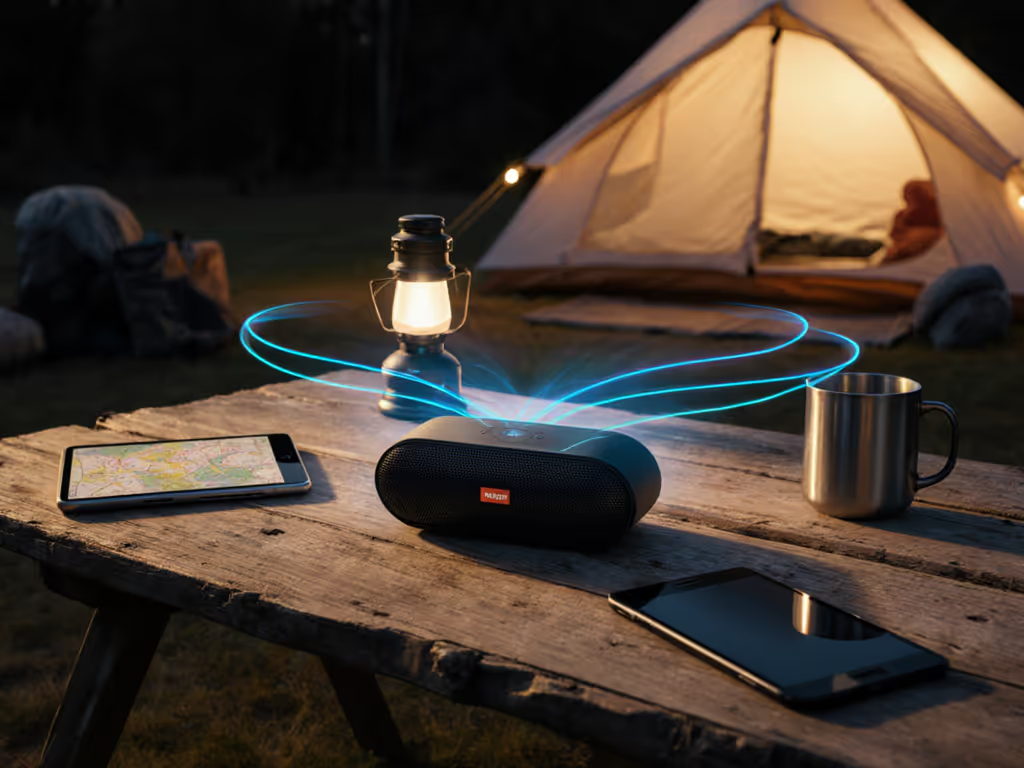
If you've ever wondered why some Bluetooth speakers deliver crisp, clear vocals while others thump with powerful bass, the answer lies in Bluetooth speaker driver technology. Understanding speaker driver types explained can transform how you select gear that actually fits your daily life, whether you're prepping breakfast in the kitchen, unwinding in the shower, or hosting friends on the patio. No audiophile degree required. I've helped dozens of neighbors and relatives set up speakers that just work, and it all starts with knowing what happens inside that compact casing.
1. What Exactly Is a Speaker Driver?
A speaker driver is a simple yet brilliant translator. It converts electrical signals from your phone into the physical sound waves you actually hear. Inside every Bluetooth speaker, you'll find one or more of these components working together. Here's the basic process:
- Your phone sends digital audio via Bluetooth
- The speaker converts this to analog signals
- The amplifier boosts these signals
- The driver vibrates, pushing air to create sound
How speaker drivers work might sound technical, but think of them like vocal cords for your speaker, they are the part that actually makes sound happen. The magic is in the electromagnetism: when current flows through the voice coil, it creates a magnetic field that moves the diaphragm back and forth. This vibration compresses and rarefies air molecules, producing the sound waves that reach your ears.
Small tweaks, big routine wins. A speaker that complements your space, not fights it, disappears into your day until you want it.
2. Tweeter vs Woofer: The Dynamic Duo
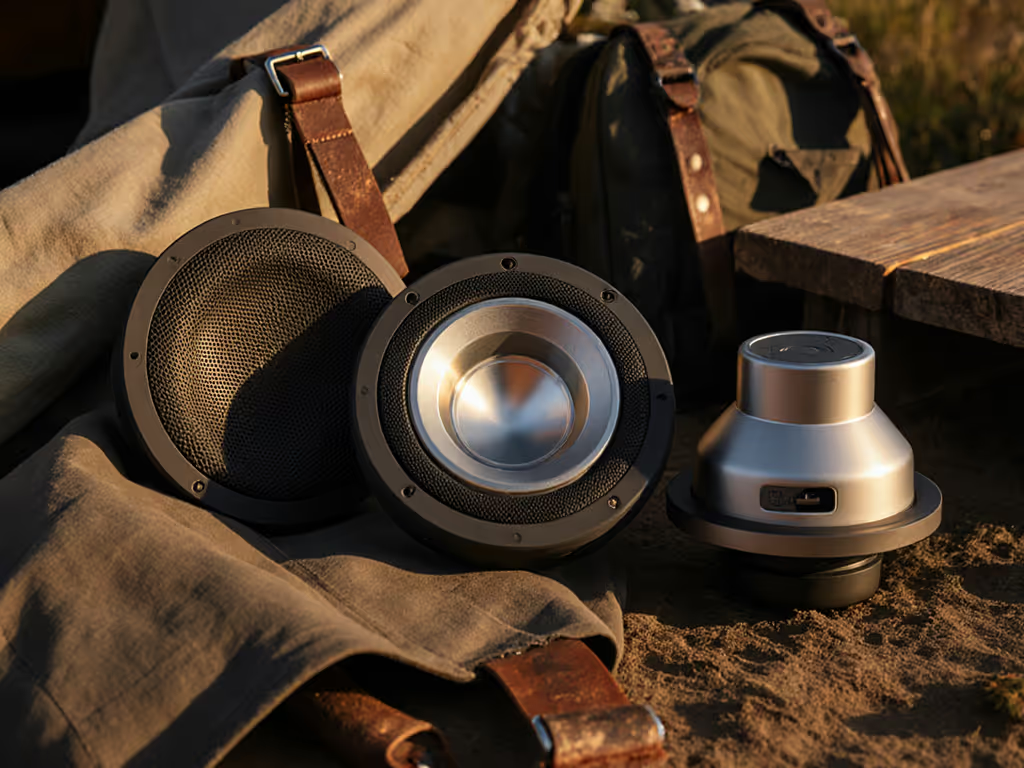
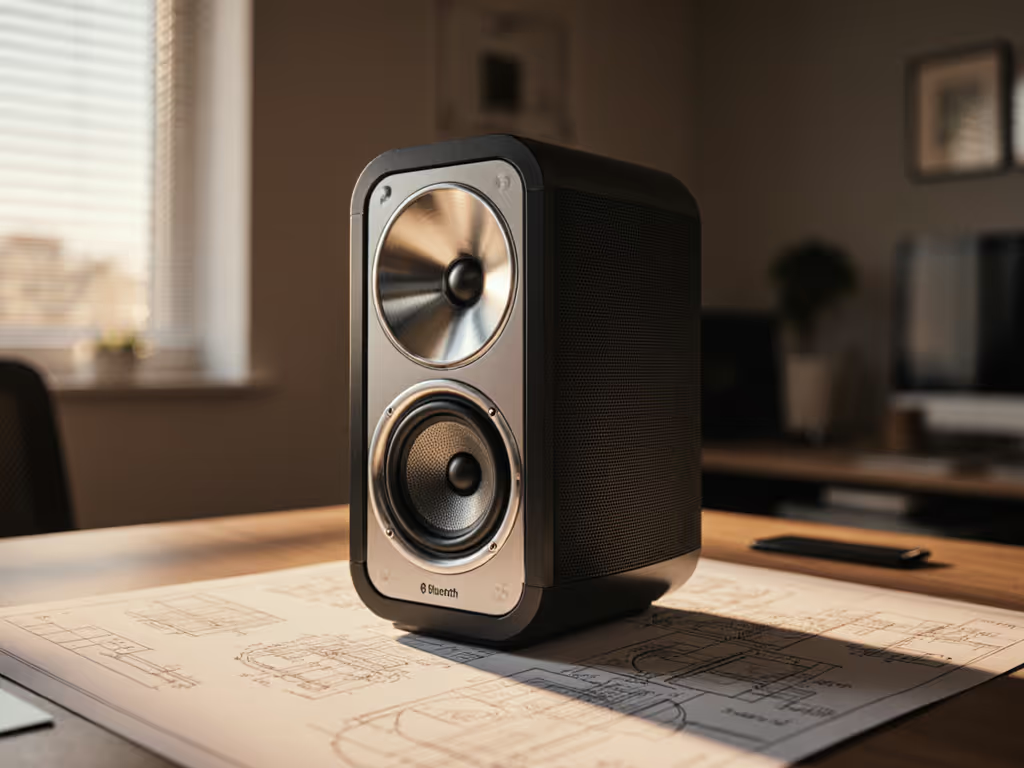
Most quality Bluetooth speakers use multiple drivers to cover different sound ranges. Here's where the tweeter vs woofer distinction becomes crucial for everyday listening:
Tweeters handle high frequencies (10,000+ Hz):
- Responsible for crisp vocals, cymbals, and that "sparkle" in music
- Typically 0.5" to 1" in diameter
- Made from lightweight materials like silk or aluminum
- Placed facing upward or outward for better dispersion in rooms
Woofers handle low frequencies (20-2,000 Hz):
- Deliver the bass you feel in your chest
- Typically 2" to 5" in portable speakers
- Use sturdier materials like paper composites or polypropylene
- Benefit from enclosed spaces (like your shower stall) to enhance bass response
When these work together properly, you get balanced sound where podcasts remain clear at volume and music keeps its emotional impact. The best portable setups (like the JBL Charge 6) position these drivers to complement common usage scenarios, whether placed on a bathroom counter or kitchen table.
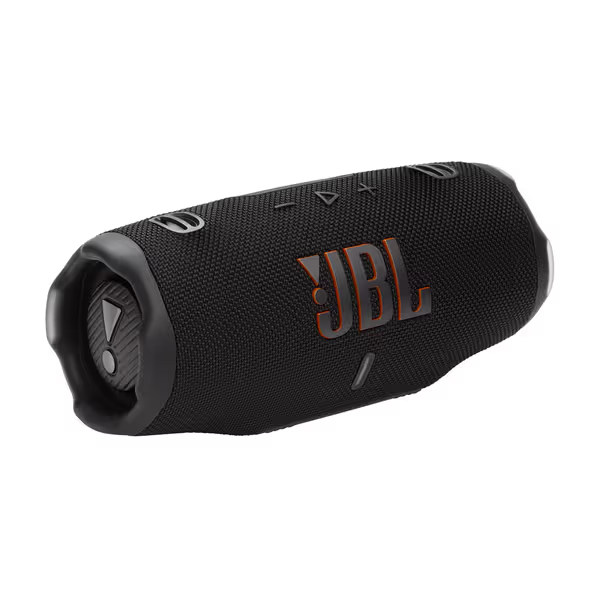
JBL Charge 6 Portable Bluetooth Speaker
Bold, distortion-free sound anywhere, with built-in power bank & strap.
$169.95
PlaytimeUp to 28 hours (with Playtime Boost)
PlaytimeUp to 28 hours (with Playtime Boost)
Pros
AI Sound Boost: Max acoustic performance, less distortion.
IP68 Waterproof & Drop-Proof: Built for adventure.
Auracast: Effortless stereo pairing & multi-speaker sync.
Cons
Charging cable not included (USB-C compatible).
Customers praise the speaker's incredible sound quality, easy Bluetooth connectivity, and portability, noting it's perfect for taking anywhere and performs well for its size. The battery life receives mixed feedback - while some say it lasts a long time, others mention it needs frequent charging. Durability is also mixed, with some saying it lasts all day while others report it breaking after a couple of hours of use. Customers find it worth its price.
Customers praise the speaker's incredible sound quality, easy Bluetooth connectivity, and portability, noting it's perfect for taking anywhere and performs well for its size. The battery life receives mixed feedback - while some say it lasts a long time, others mention it needs frequent charging. Durability is also mixed, with some saying it lasts all day while others report it breaking after a couple of hours of use. Customers find it worth its price.
3. Full-Range Drivers: The Jack-of-All-Trades Solution
Some compact speakers (like the JBL Flip 7) use a single full-range speaker driver that attempts to cover both high and low frequencies. This approach has practical advantages for everyday users:
- Simpler controls: Just one volume knob instead of complex EQ settings
- Faster setup: One less thing to configure when you're in a hurry
- Predictable placement: No need to orient multiple drivers toward listeners
- Space efficiency: Critical for small spaces like showers or tiny kitchens
While audiophiles might notice slight compromises in extreme highs or lows, these drivers excel at the 80% of use cases that matter most: clear morning podcasts, consistent background music, and reliable volume during daily routines. For bathroom setups, I often recommend these because they maintain vocal clarity even when water's running. That's one less tap and one more song before work.
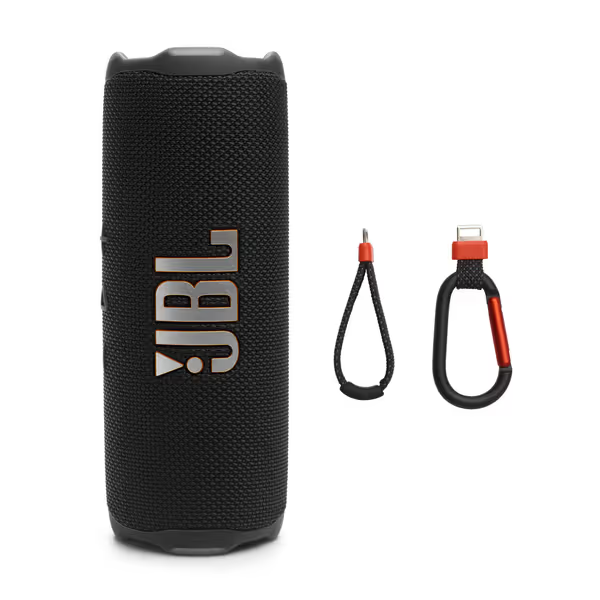
JBL Flip 7
Bold, clear sound for any adventure, verified tough.
$149.95
IP RatingIP68 dust/waterproof + drop-proof
IP RatingIP68 dust/waterproof + drop-proof
Pros
Punchy JBL Pro Sound with AI Boost for clarity
Extreme durability for outdoor adventures
Auracast for stereo pairing & multi-speaker sync
Cons
Battery life reports vary at high volumes
Customers praise the speaker's sound quality, build durability, and portability, noting it's perfect for trips and pool areas. The Bluetooth connectivity receives positive feedback for its ease of pairing with phones, and customers find it well worth the price. The battery life receives mixed reviews - while some find it great, others report it doesn't last as long as advertised.
Customers praise the speaker's sound quality, build durability, and portability, noting it's perfect for trips and pool areas. The Bluetooth connectivity receives positive feedback for its ease of pairing with phones, and customers find it well worth the price. The battery life receives mixed reviews - while some find it great, others report it doesn't last as long as advertised.
4. Audio Driver Materials: More Than Marketing Hype
The audio driver materials directly impact your speaker's longevity and sound character in real-world environments. Here's what actually matters for daily use:
- Water-resistant coatings: Essential for bathroom/kitchen use (look for IPX7+ ratings)
- UV-stable polymers: Prevent cracking when used outdoors regularly
- Rust-proof baskets: Critical for poolside or beach use
- Dust-resistant suspensions: Maintains sound quality in sandy or dusty environments
I once helped a neighbor set up a speaker for their lakeside cabin using a model with marine-grade driver materials. Three seasons later, it still delivers clean sound despite regular exposure to moisture and dust. For most home environments, basic waterproofing (IPX4+) plus durable driver materials will ensure years of reliable service without constant maintenance. Not sure which rating you need? Compare protections in our IPX waterproofing guide.
5. Bluetooth Speaker Driver Technology: The Wireless Twist
Wireless speakers add two critical components between your audio source and the drivers:
- Digital-to-Analog Converter (DAC): Translates Bluetooth's digital signal to analog
- Built-in amplifier: Boosts the signal to drive the speakers properly
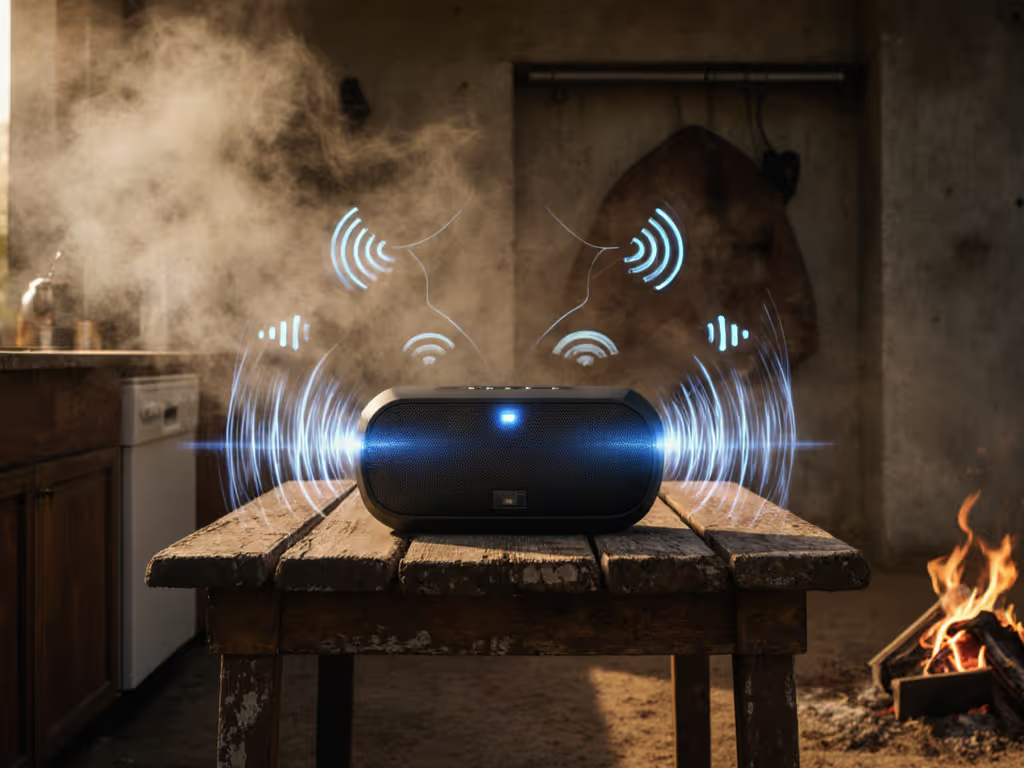
This is where "smart" features like JBL's AI Sound Boost or Bose's PositionIQ come into play, and they optimize how audio reaches your drivers based on usage context. For a practical primer on Bluetooth versions and audio codecs that affect quality before the DAC, see our Bluetooth codecs guide. For practical applications:
- Bathroom steam can muffle highs, so some speakers automatically boost treble
- Outdoor settings might enhance bass to compensate for open space
- Horizontal vs vertical placement triggers different equalization profiles
These adjustments happen silently in the background, exactly how household tech should work. The best implementations require zero user input, just reliable sound wherever you place your speaker.
6. Choosing Drivers for Your Daily Routine
When selecting a speaker, match the driver configuration to your primary use case:
- Shower/kitchen: Single full-range driver (2"+) with IPX7 rating
- Balcony/patio: 2-way system (tweeter + woofer) with directional tweeter
- Beach/campsite: Rugged single driver with strong bass response
- Small apartment: Compact 2-way system with controlled bass output
If your primary use case is the beach or campsite, our rugged outdoor speaker picks focus on durability and weather resistance alongside sound. My aunt wanted music in the bathroom but hated complicated setups. We chose a speaker with a single robust driver, IPX7 rating, and just two buttons: volume up/down. She placed it on a non-slip shelf at least 24 inches from the shower stream. The next week, she told me her morning routine felt calmer, and nothing needed my help.
7. Safety & Placement: Non-Negotiable Basics
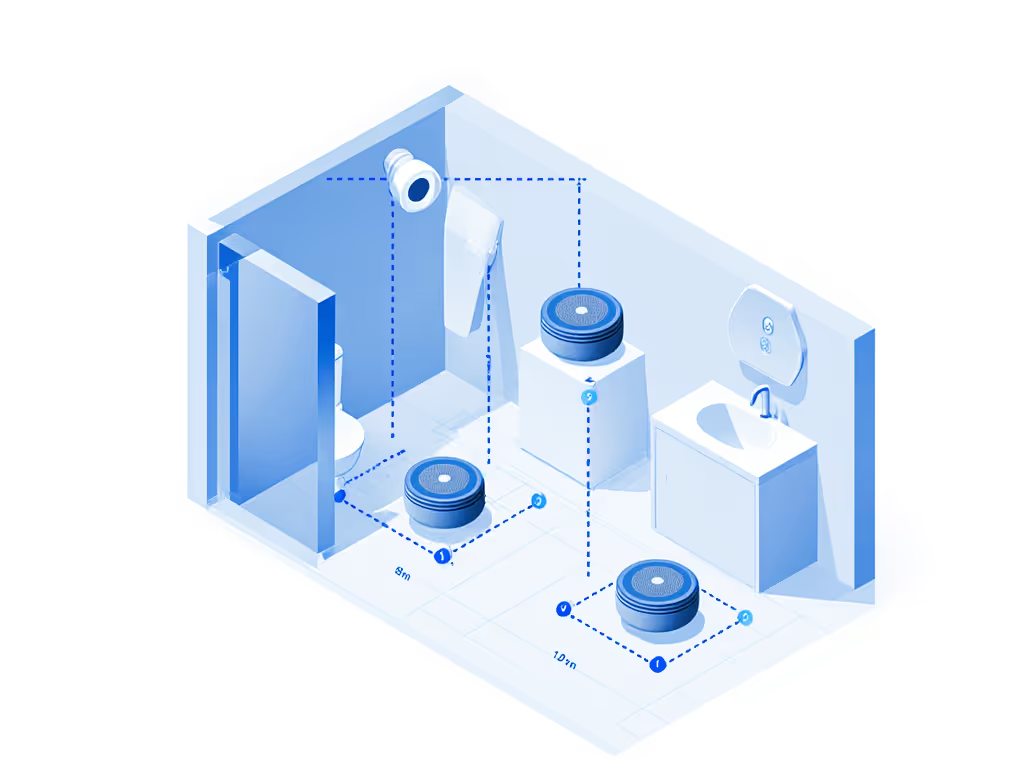
Clear safety notes (IP ratings, safe distance from splashes) should guide your setup:
- Maintain 18+ inches between speaker and direct water contact points
- Never place speakers directly under shower heads or kitchen faucets
- Verify actual IP ratings (IPX4 = splash proof, IPX7 = brief submersion)
- Keep at least 12 inches from steam sources like kettles or showers
For bathroom installations, I recommend mounting speakers on the wall opposite the shower (not in the steam cloud path) or using a dedicated waterproof shelf positioned well away from direct water exposure. A simple setup takes under 5 minutes but prevents months of frustration. For room-size effects and positioning tricks beyond bathrooms, see our home speaker placement tips.
Final Thought: Less Spec-Staring, More Listening
You don't need to memorize driver specifications to enjoy great sound. Focus instead on how the speaker fits your routine: clear voice prompts, intuitive controls (three buttons max for daily use), and reliable performance in your specific environment. The right Bluetooth speaker driver technology disappears into your day until you want it, then delivers exactly what you need.
Further Exploration
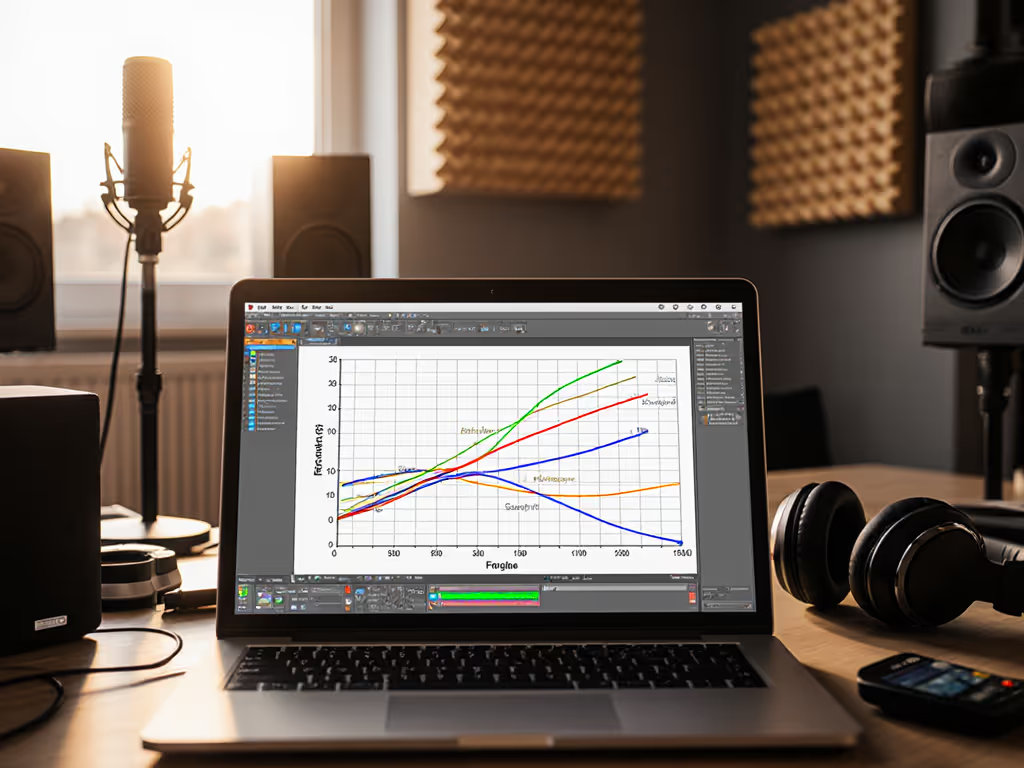
If you're curious about how different drivers perform in real-world scenarios, I've put together a simple comparison showing how tweeter/woofer setups versus full-range drivers sound in typical home environments. It includes audio samples recorded in actual kitchens and bathrooms (not anechoic chambers) to help you hear the difference where it matters most. Drop a comment below if you'd like me to share those practical listening tests!
Related Articles