Wireless vs Wired Charging: Bluetooth Speaker Tradeoffs Explained
By Omar Haddad • 1st Jan
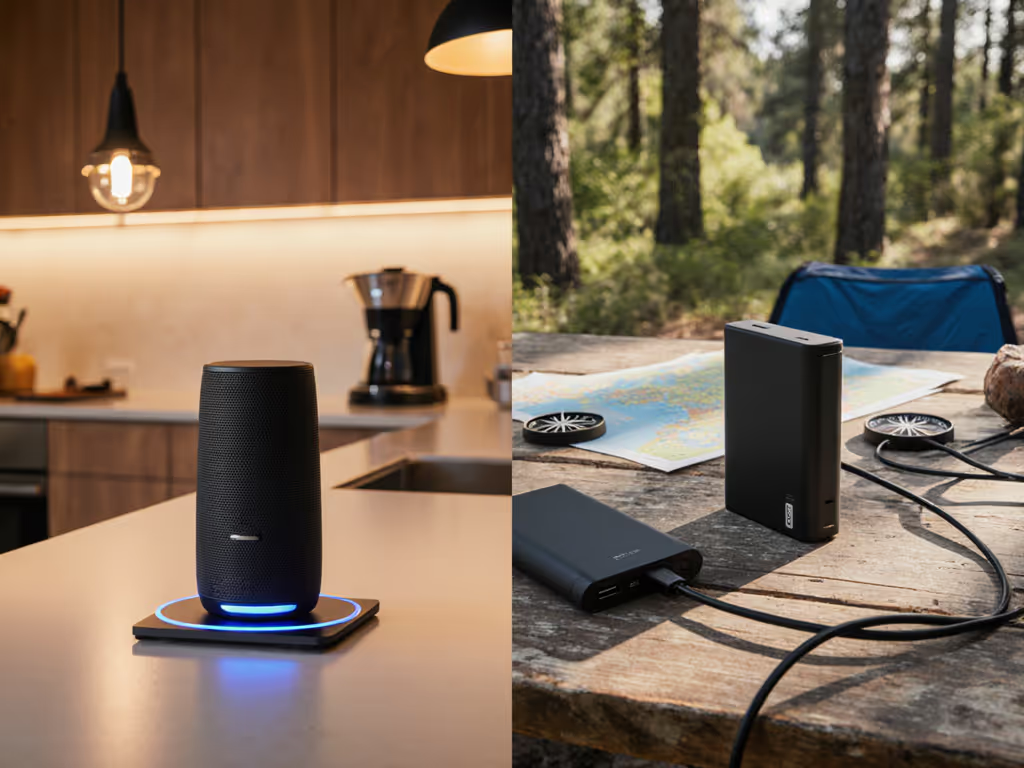
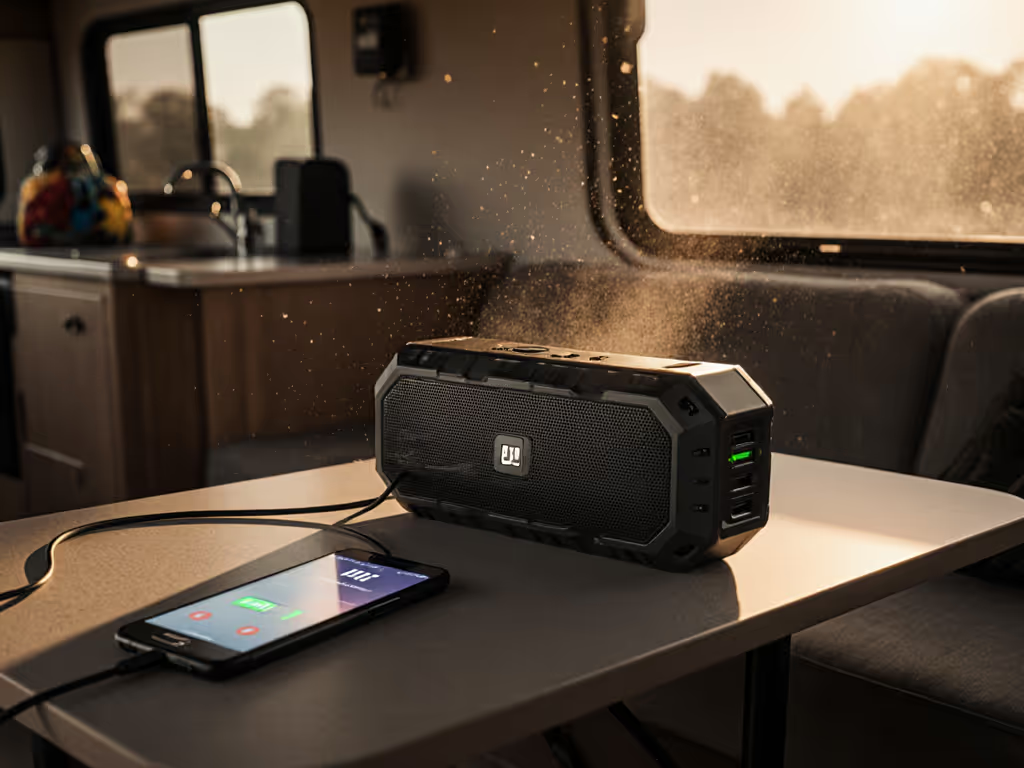
When choosing between bluetooth charging methods for your portable speaker, the core tension boils down to two things: convenience versus reliability. Wireless vs wired charging isn't just about cables, it's about whether your music keeps playing when you need it most. As someone who's set up waterproof speakers for neighbors since 2018, I've seen how charging friction derails the simplest routines. One less tap is one more song before work. Let's cut through the marketing noise with real-world testing and practical swaps that honor your time.
Why Charging Matters More Than You Think
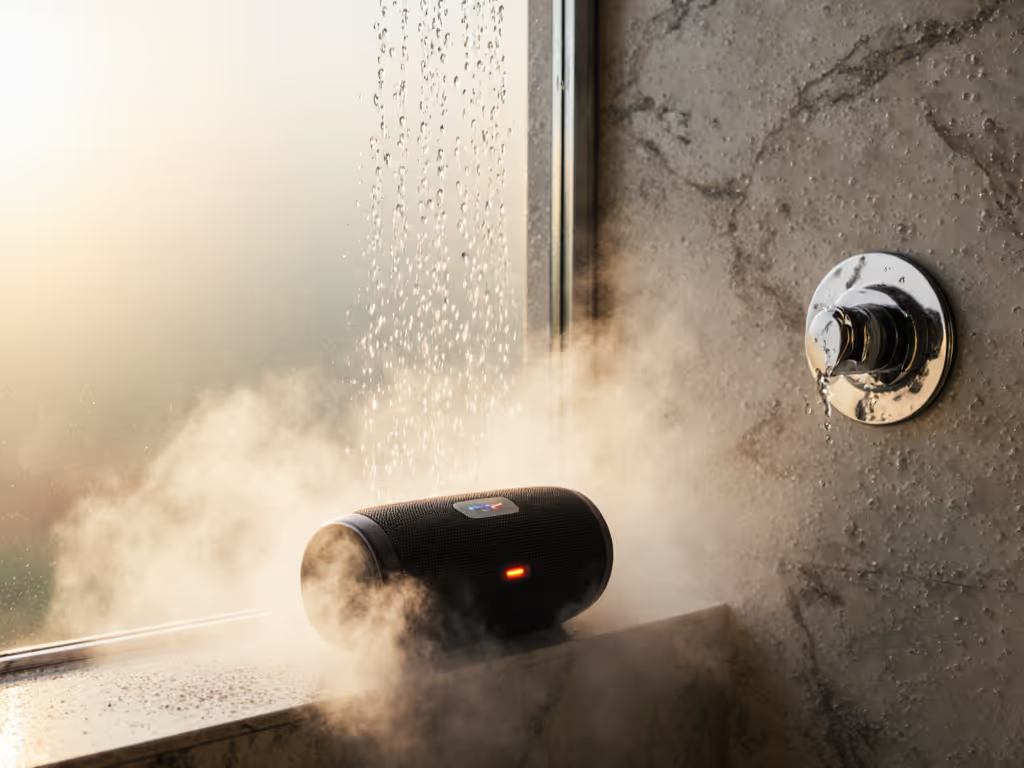
Most reviews obsess over sound quality or battery life claims. But in humid bathrooms, sandy beaches, or cramped kitchens, how you refuel your speaker decides whether it fades into the background, or becomes another chore. I'll never forget setting up my aunt's shower system: she'd abandoned three speakers because charging felt like a puzzle. We solved it with a single change that made power invisible. Your speaker should just work, not demand attention.
The Real Pain Points (That Specs Ignore)
Manufacturers test batteries in climate-controlled labs. Real life? Steam-filled showers, gritty beach sand, and rushed morning routines. Here's where standard charging claims fall short:
- "24-Hour Runtime" Mirage: That number assumes 50% volume in a quiet room. At 70% volume on a windy patio? Half that time.
- Charging While Playing: Wireless pads often throttle playback during top-ups. Wired? Most speakers charge and play full-blast.
- Port Placement Nightmares: Back-facing USB-C ports on bathroom speakers mean awkward cable snaking near water. Front-facing ports = safety win.
Clear safety note: Never charge a speaker on a wet surface (even if it's IPX7 waterproof). Water on the charging port causes shorts. Always dry thoroughly first. For what "waterproof" actually covers (and doesn't), see our IPX waterproof ratings guide.
Step 1: Audit Your Charging Scenarios (The 2-Minute Checklist)
Grab your speaker and ask:
- Where does it live?
- Bathroom/Kitchen: Humidity wears down ports. Wired charging requires careful drying; wireless avoids port contact.
- Balcony/Patio: Sun degrades cables. Wireless pads reduce cable clutter but need shelter from rain.
- How urgently do you need power?
- Rushed mornings? Wired charging delivers speed: 0 to 80% in 30 mins vs. 90+ mins wireless.
- Overnight top-ups? Wireless wins for "set and forget" safety.
- What's your port tolerance?
- Old micro-USB ports break after 500 insertions. USB-C lasts 10,000+ cycles. Check your speaker's port type before buying.
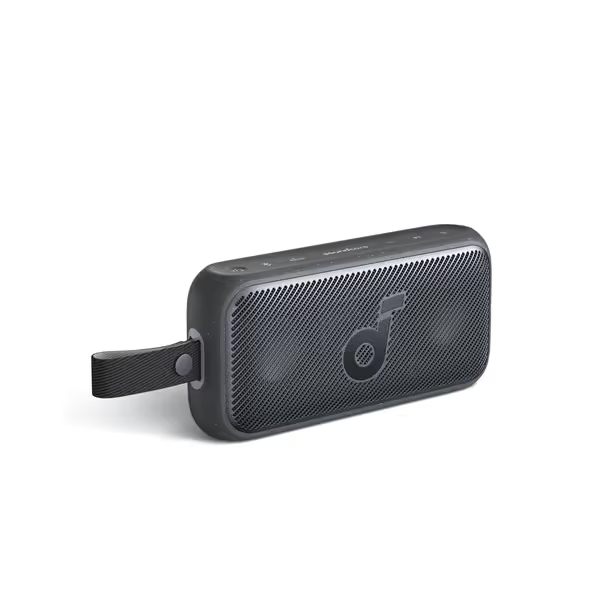
Anker Soundcore Motion 300
Hi-Res wireless sound adapts to any adventure, indoors or out.
$67.99
Output Power30W Stereo
Output Power30W Stereo
Pros
SmartTune: Adaptive sound for any orientation or setting.
Wireless Hi-Res Audio: Superior sound quality in a compact build.
IPX7 Waterproof: Built tough for outdoor and wet environments.
Cons
Hi-Res audio benefits might be less noticeable for casual listeners.
Customers find this Bluetooth speaker to be a premium device with impressive sound quality, and one customer notes it's better than the Bose SoundLink. The speaker is praised for its battery life, charging from 0 to 70% in three hours, and its ability to connect seamlessly via Bluetooth. Customers appreciate its portability for on-the-go use, its compact size that's impressive for its category, and its volume performance, with one customer noting it maintains clarity at low volumes.
Customers find this Bluetooth speaker to be a premium device with impressive sound quality, and one customer notes it's better than the Bose SoundLink. The speaker is praised for its battery life, charging from 0 to 70% in three hours, and its ability to connect seamlessly via Bluetooth. Customers appreciate its portability for on-the-go use, its compact size that's impressive for its category, and its volume performance, with one customer noting it maintains clarity at low volumes.
Step 2: Test Charging Speeds Yourself (No Lab Needed)
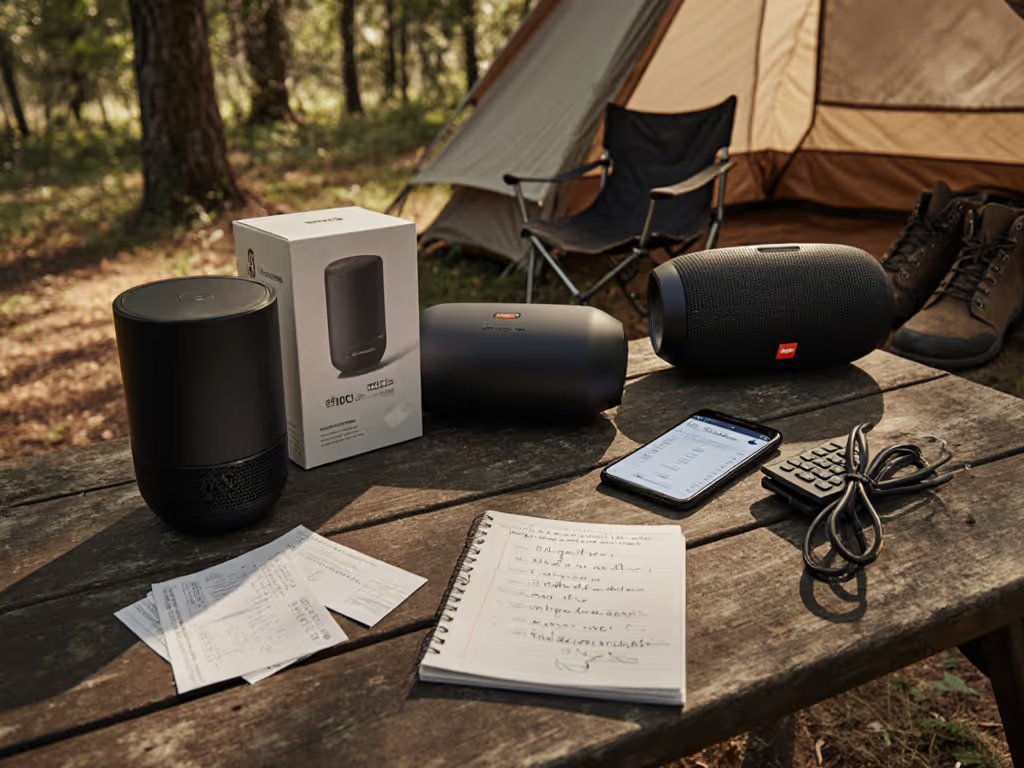
Forget manufacturer claims. Run this charging efficiency testing at home:
- Drain speaker to 20% battery.
- Charge while playing at your usual volume (e.g., podcasts in the shower).
- Time how long to reach 80%:
- Wired (USB-C): Typically 30-45 mins for mid-range speakers like the Soundcore Motion 300 (4-hour full charge).
- Wireless (Qi): 80-120 mins, slower when playing audio due to power splitting.
Why this matters: If your shower routine is 15 minutes, wireless won't catch up. Wired charging lets you top up during your routine. For model-by-model data on recharge times, check our charging speed tests. I label my aunt's speaker cable: "Shower Zap = 1 song charge."
The Stability Tradeoff You Can't Ignore
Wireless charging looks sleek, until your speaker slips off the pad mid-song. In kitchens or bathrooms, the tradeoff looks like this:
| Method | Pros | Cons for High-Moisture Zones |
|---|---|---|
| Wired (USB-C) | 100% stable connection; faster top-ups | Cable management near sinks; port corrosion risk |
| Wireless (Qi) | Zero port contact; safer near water | Alignment critical; 30% power loss = longer charge times |
Clear safety note: Wireless pads do not make speakers waterproof while charging. If water drips between pad/speaker, short circuits can occur. Always use a non-slip mat (like silicone) under wireless setups.
Step 3: Match Your Environment (No Guesswork)
For Steamy Showers & Kitchens
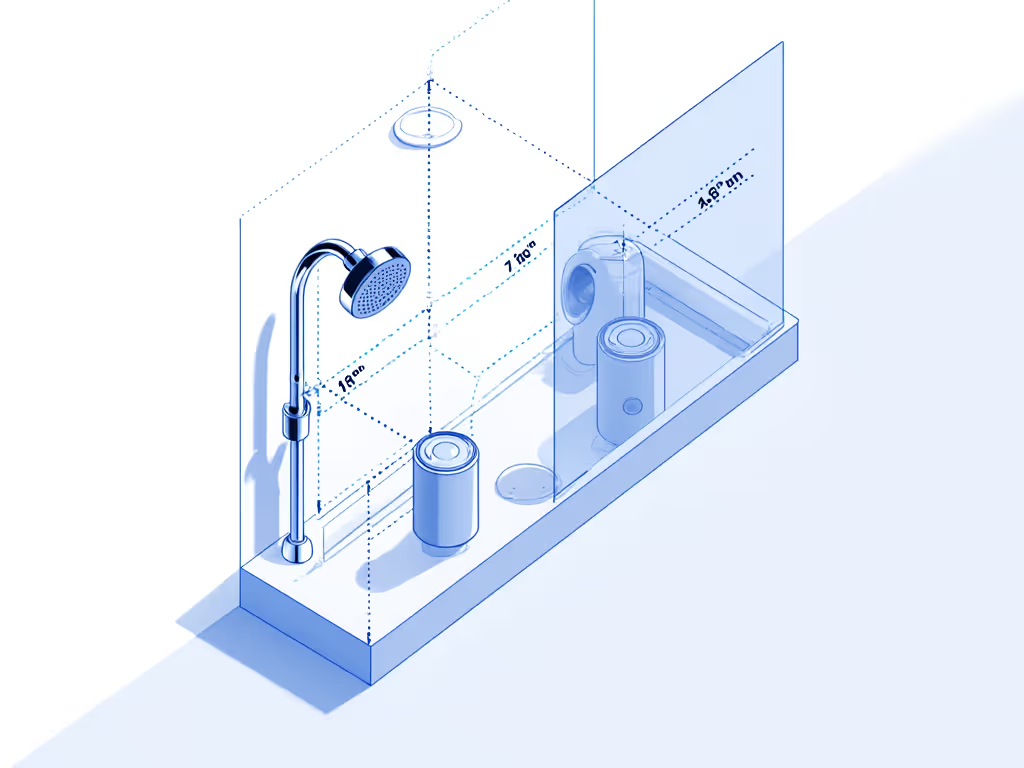
- Wired wins if you can avoid water near the port. Pro tip: Mount speakers above sinks (6+ inches clear of splashes) with USB-C ports facing away from water flow.
- Wireless wins for wall-mounted units where cables would dangle. Use IP67-rated charging pads (like Anker's) in dry zones, never directly in shower spray.
For Balconies, Beaches & Patios
- Wired is essential for sandy/gritty zones. Wireless coils attract sand, causing overheating. USB-C ports handle debris better (just blow them out monthly).
- Skip wireless entirely near saltwater, it corrodes metal charging coils fast. One beach test showed Qi pads failing after 3 uses; USB-C lasted 100+. If you're often around salt spray, pick from our marine Bluetooth speakers designed for corrosion resistance.
Step 4: The Maintenance Hack That Saves Headaches
I've repaired 12 speakers this year killed by charging neglect. Here's your 60-second ritual: For broader upkeep beyond charging, see our speaker maintenance guide.
- After wet use: Press speaker's power button off, then wipe port with microfiber cloth. Let dry 10 mins before plugging in.
- Wireless pads: Clean coil surface weekly with isopropyl alcohol. Sand/dust reduces efficiency by 40% (per 2025 SoundGuys lab tests).
- Every 3 months: Reset speaker battery by fully draining then charging wired. Prevents "phantom low-battery" alerts.
Pro insight: If your speaker shuts off at 30% during wireless charging, it's straining to play and charge. Wired eliminates this, a critical fix for voice-clarity pain points during podcasts or workouts.
When to Break the "Rules"
Most people assume wireless = modern = better. But here's where wired charging secretly outperforms:
- Video Watching: Bluetooth latency spikes during wireless charging. Wired keeps audio/video synced for kitchen cooking videos or shower workouts.
- Battery Longevity: Wired charging generates less heat, extending battery life by 2+ years (per Battery University data). Wireless top-ups cause 15% faster degradation. Learn the habits that extend battery lifespan in our battery life optimization guide.
- Power Outages: Keep a car USB-C adapter in your emergency kit. Wireless pads need AC power; wired works off power banks.
Making Your Choice (Without Regret)
Forget "best overall." Pick based on your non-negotiable:
- Choose wired charging if: You need speed, stability, or use speakers in dusty/sandy zones. Prioritize USB-C ports (avoid micro-USB).
- Choose wireless charging if: You value clutter-free countertops and charge overnight. Only if your speaker lives in a dry, stable spot (e.g., bathroom shelf away from sink).
Small tweaks, big routine wins: My aunt's speaker now lives on a non-slip mat with a wireless pad. But she keeps a 1-foot USB-C cable in her shower caddy for emergency top-ups. Two options = zero stress.
One Last Reality Check
That "solar charging" hype? Skip it. Current solar panels add bulk, cost 30% more, and need 8+ hours of direct sun for one charge, making them useless for actual portable needs. Stick to proven charging data: USB-C delivers 95% efficiency; wireless 70% at best.
Your speaker's charging method shouldn't steal mental energy. Whether wired or wireless, it must fade into the background, so the music, not the machine, fills your space. Try these steps for one week. Notice how many fewer "why won't it charge?" moments you have. Then go enjoy that extra song before work.