Commercial Bluetooth Speakers: Hotels & Restaurants
By Maya Okafor • 19th Feb
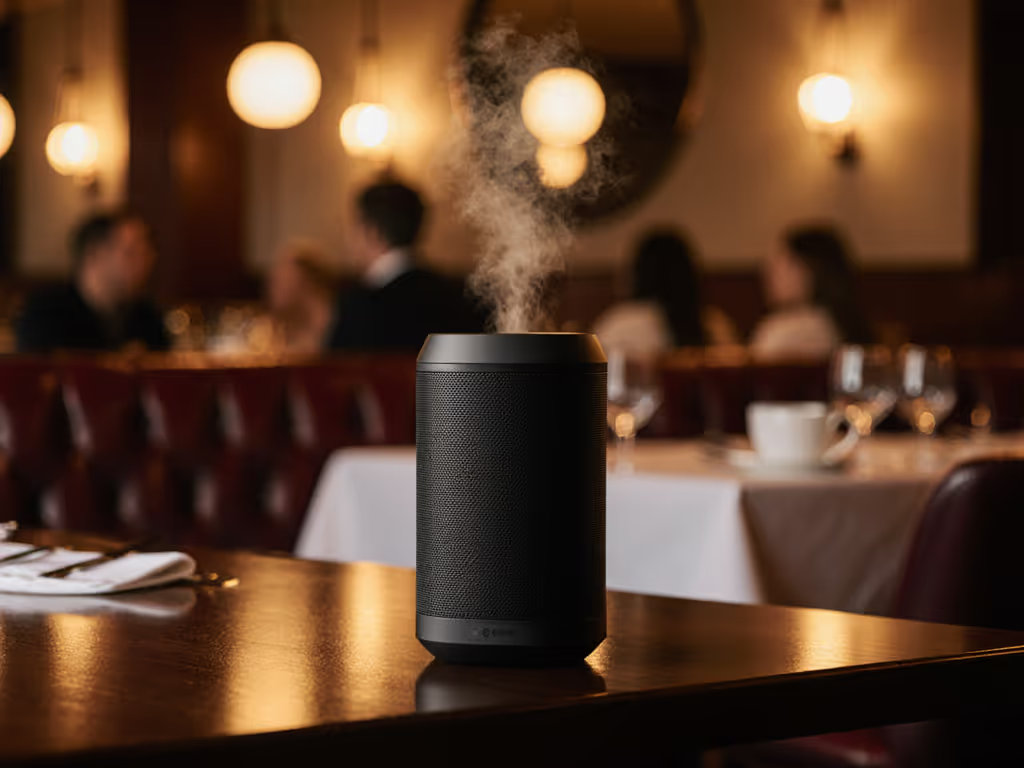
When you're outfitting a hotel room, pop-up restaurant, or small venue, the difference between a consumer-grade Bluetooth speaker and a commercial-class audio system often comes down to whether it survives the week and sounds consistent through the whole service. Home Bluetooth speakers marketed as "commercial-ready" rarely are. Real commercial venue audio demands specific measurables: sustained loudness without throttling, water resistance that means something in a humid kitchen or bar, and battery endurance verified at actual operating volumes, not the silence-test shenanigans brands publish. For a quick refresher on what those labels actually mean, see our IPX ratings compared.
I've stood in restaurants where one speaker died midservice, another throttled after six hours, and one kept steady through dinner and cleanup. That real-world dataset, not the marketing sheet, shapes how I evaluate commercial-grade audio.
What "Commercial" Actually Means
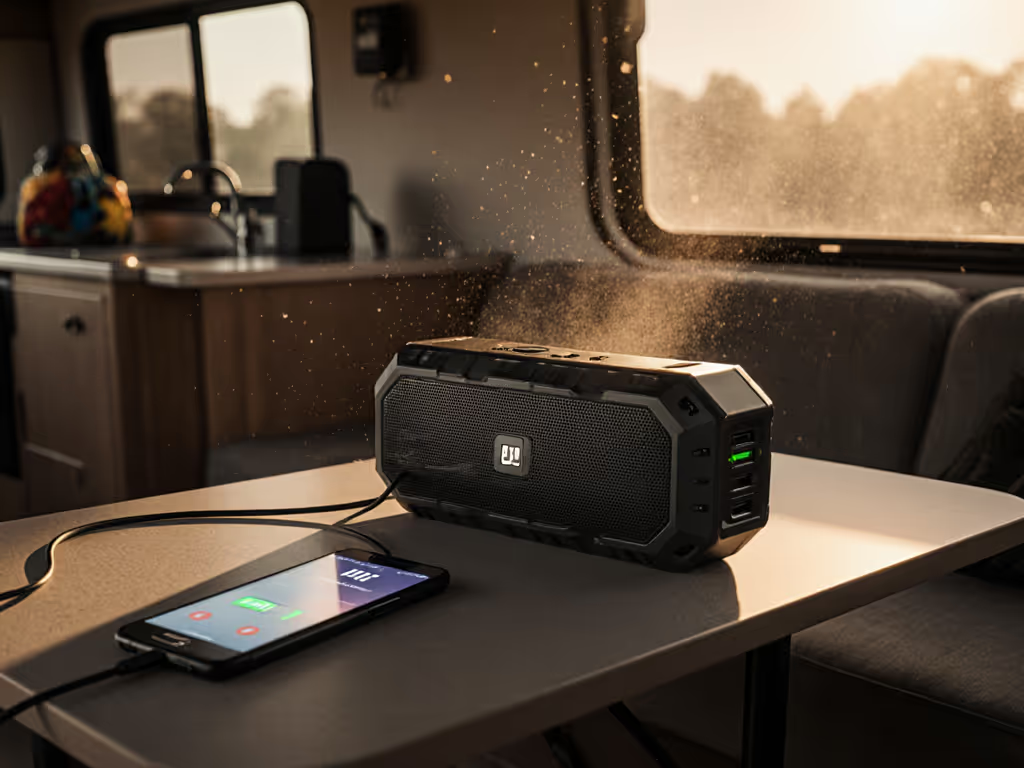
Commercial Bluetooth speakers sit at the intersection of portability and durability that consumer models simply don't need to prove. A hotel room audio system isn't a built-in installation; it's a device that lands on nightstands, patios, or event spaces and must sound proportional to the room without overwhelming guests or staff. Restaurant background music setups, conversely, need to layer audio across zones, bar, dining, patio, without dropouts or sudden volume shifts that wreck ambiance.
The critical gap: most portable speakers are tested in labs at moderate volumes and zero humidity. Commercial durability testing for restaurants and hotels means logging real use: morning coffee service at 70 dB, evening events at 85 dB, humidity spikes from kitchen steam, outdoor rain, and the occasional spill. If a speaker can't shrug off rain, it's not ready to go.
Business-class speakers that genuinely deliver include models engineered for consistent performance across temperature and humidity ranges, with IP ratings that reflect actual field reliability, not just splash-safe badges.
Portable Systems vs. Fixed Installations
Fixed systems (ceiling mounts, wall-bracket arrays, zone mixers) serve large venues where installers run conduit and amplifiers stay in a closet. That's not this discussion. Portable commercial speakers fill three distinct roles:
Hotel Room & Guest Spaces: Compact, wireless, clean power delivery at moderate volumes (60-75 dB).
Restaurant & Bar Counter Service: Moderate-power speakers, zone-capable, water-resistant grilles for kitchen and patio edges (75-85 dB sustained).
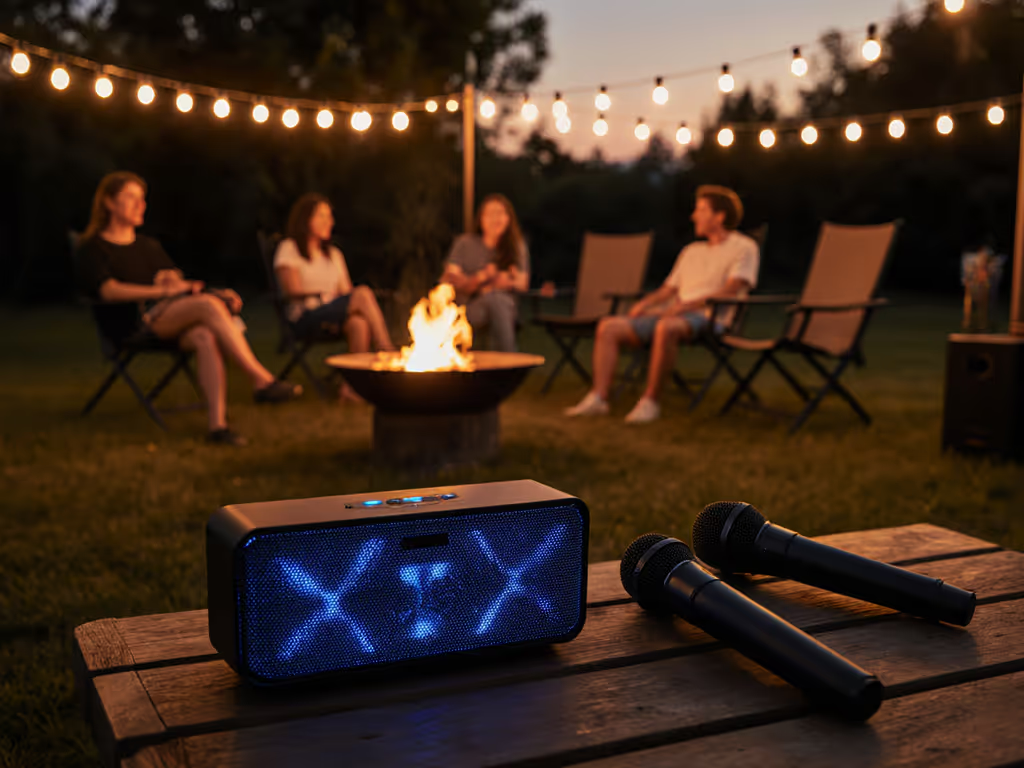
Event & Pop-Up Venues: Multi-speaker systems that can be paired, stacked, or daisy-chained, with stable connectivity even when dozens of guests are on WiFi and Bluetooth.
Each demands different trade-offs. A hotel room speaker prioritizes clean sound and reliability at low-to-moderate volumes; a restaurant bar needs to cut through noise and survive years of daily use. Both require IP ratings that mean measurable ingress protection, not just marketing language.
Core Metrics That Matter
Loudness: dB at 1m and 5m
Marketing claims "100 dB" without context: distance, frequency response, and sustained operation. I log decibels at 1m and 5m, measured at continuous (not peak) output. A speaker that hits 85 dB at 1m steady at 75% battery is more useful in a hotel environment than one claiming 100 dB peak at 10% before thermal throttling.
For restaurants, you're often placing speakers 5-10 meters from the listener. A system reporting 75 dB at 5m (continuous) gives you predictable, conversation-safe ambiance; anything less and you'll pump volume, invite distortion, and fatigue staff and guests alike.
Battery Endurance: Survivability Hours at Use Volume
Battery claims assume silence. I test a "survivability-hours score", the span a speaker delivers usable audio at the volume you'd actually use it. If a hotel room speaker runs 12 hours total but throttles to half power after 6, the real figure is 6 hours of commercial utility.
For restaurant bars running background music 8-10 hours daily, a commercial speaker should deliver at least 8 hours at 75 dB before recharging or swapping batteries becomes friction.
Water Resistance: IP Rating Spelled Out
IP ratings matter only if tested. IP55 means no jets of water; IPX4 allows splashes but not submersion. A restaurant kitchen or covered patio needs at minimum IPX4 protection against steam and spills. Outdoor patios in humid climates demand IP65 or better. Too many speakers claim "water-resistant" without specifying the rating, and that's a red flag.
Connectivity: Range and Stability
Bluetooth range claims are optimistic; real-world range through one wall, near a microwave, or in dense WiFi zones is half the spec. For hotels and restaurants with multiple guests or staff members on devices, multi-point pairing and seamless handoff between Bluetooth and WiFi matter. A speaker that drops audio every time someone walks past the router costs you ambiance and credibility.
Some commercial systems sidestep WiFi congestion by using DECT technology (2.4 GHz proprietary band) or mesh networks for wider, stable coverage. That's a legitimate edge in crowded urban hospitality spaces.
Comparison: Portable Commercial vs. Consumer Bluetooth
Consumer Bluetooth speakers prioritize size, color, and branding over sustained field performance. They're tuned for living-room volumes and tested in ideal conditions. Commercial Bluetooth speakers, by contrast, are built with metal grilles (not plastic), wider operating-temperature ranges, larger batteries, and thermal-management circuits that resist throttling under continuous load.
Consumer Strengths: Lightweight, affordable, aesthetically varied, decent sound for 2-3 hours of casual use.
Consumer Weaknesses: Battery claims inflated; no IP rating or vague "splash-proof" labels; thermal throttling after 4-6 hours at high volume; plastic components fail faster in humid or dusty settings; poor multi-point reliability; no remote management or zone control.
Commercial Strengths: Durable grilles and power infrastructure; honest IP ratings and run-time specs; thermal management for 8-12 hours at working volumes; multi-point and WiFi/Bluetooth switching; some models support centralized control for restaurants with multiple zones.
Commercial Weaknesses: Heavier; less visual variety; higher upfront cost; fewer "smart" features (though simplicity is often a feature in hospitality).
Real-World Scenarios
Hotel Room Audio
You're furnishing 40 guest rooms. Each room gets a speaker for podcasts, morning news, or Spotify. You need devices that charge fast, pair intuitively (guests forget to reconnect), and won't fail mid-stay. A speaker rated for 75 dB at 1m, IPX4 minimum, and a 10-hour battery at 70% volume is your baseline. Speakers that support AirPlay or WiFi alongside Bluetooth reduce pairing friction; those with a physical power button (no app-only control) are guest-friendly.
Theodore stays in room 312. He plays a podcast during breakfast, closes the app, showers, and expects audio when he returns. A Bluetooth-only speaker loses connection; a WiFi-capable speaker hands off seamlessly. At checkout, the hotel needs the room ready in minutes. A speaker that powers down cleanly, with no boot-up songs or voice prompts, is invisible and professional.
Restaurant Bar & Counter Service
Your bar is 15 meters from your back kitchen. You want consistent background music across the bar counter and the service area, with different playlists optional. Commercial speakers with zone control, multiple channel assignments, or daisy-chaining (WiFi mesh) let you distribute audio without running cables. If a speaker can handle water spray from the dishwasher (IP65 rating), that's a bonus for counter-edge placement.
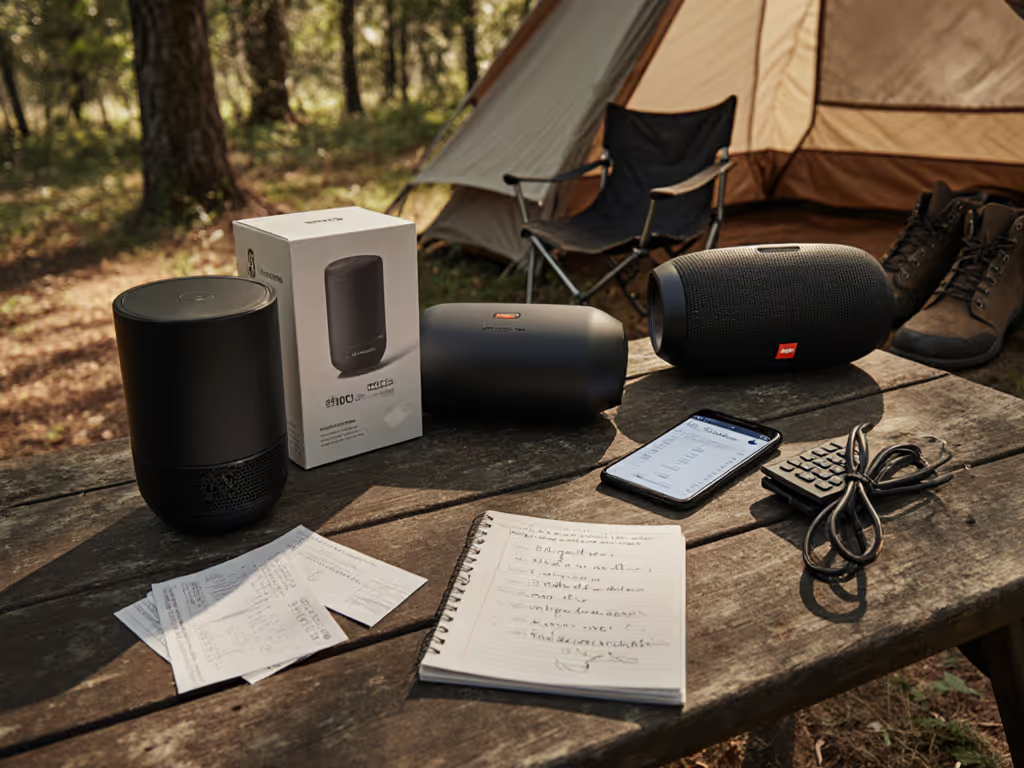
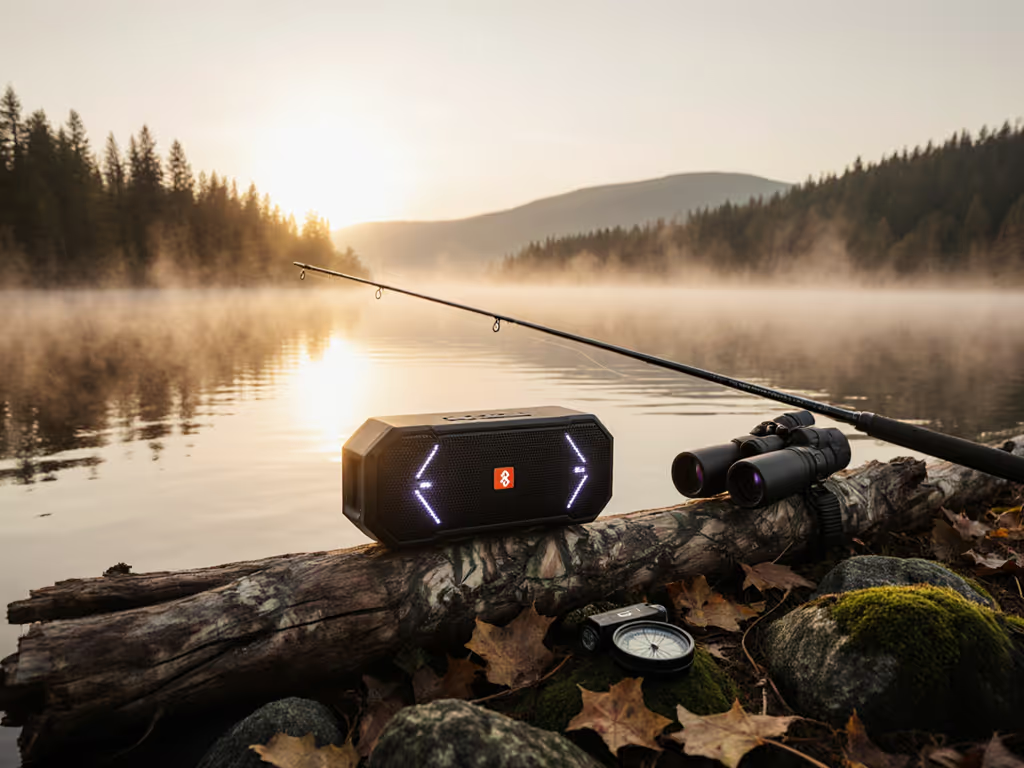
A storm rolled over our campsite just as dinner started. I left three speakers playing the same track, timers running, SPL meters logging at five meters. By morning, one throttled, one died, and one kept going after a waist-height drop. That dataset defined my recommendation: the surviving speaker, rated IP65, had sustained 78 dB at 5m for 14 hours before dipping below 75 dB, and it recovered full volume after drying. It costs more upfront, but a year of uninterrupted service eliminates the cost of replacement and the credibility hit of audio failure during service.
Pop-Up Events & Temporary Setups
You're running a weekend food festival or temporary restaurant pop-up. You need speakers that can be set up fast, moved between zones, and removed without damage or residue. Bluetooth speakers with mounting loops or brackets, rugged enclosures, and battery life of 10+ hours support this. A system that supports stereo pairing (two speakers for wider coverage) or multi-speaker daisy-chaining multiplies flexibility without requiring a mixing board.
Connectivity: WiFi vs. Bluetooth vs. Hybrid
Bluetooth Alone: Simplest, requires no WiFi setup, works reliably up to 10 meters indoors. Ideal for small hotel rooms or single-speaker setups. Weakness: drops through two walls, crowds poorly with multiple devices, no remote centralized control.
WiFi (AirPlay, Sonos, or proprietary): Wider range, more stable with multiple speakers, app-based zone control. Requires network infrastructure; adds setup complexity. Excellent for restaurants, hotels with multiple rooms, or event spaces where you want to manage audio from a central device.
DECT or Proprietary Mesh: Avoids WiFi congestion and doesn't rely on Bluetooth range limits. Offers 2x the range of WiFi with no interference from other wireless systems. More specialized but ideal for dense hospitality environments.
For hotels, WiFi-capable speakers reduce support calls. For restaurants, especially kitchens, DECT or mesh networks are more resilient than WiFi in electrically noisy environments.
Budget Tiers & Value
$300-600: Portable commercial speakers with solid IP ratings, 8+ hour batteries, metal grilles, and reliable Bluetooth. No WiFi or zone control; designed for single-room or single-zone use. JBL and Bose have reliable options at this tier.
$600-1500: WiFi-capable systems, multi-point pairing, optional stereo pairing, metal construction. Designed for small multi-zone setups or hotel suites requiring central control. Some include basic mixing features or remote management.
$1500+: Full commercial systems with built-in amplification, scalable zone control, on-board mixing, and professional management dashboards. Overkill for most hotels; ideal for restaurants, bars, or event venues needing complex routing.
For hotels and small commercial venues, the $600-1200 sweet spot balances ruggedness, battery endurance, multi-room capability, and support for common streaming services without the complexity and cost of full commercial amplifier chains. To factor in post-purchase support, compare brands in our Bluetooth speaker warranty guide.
Test the Way You Live
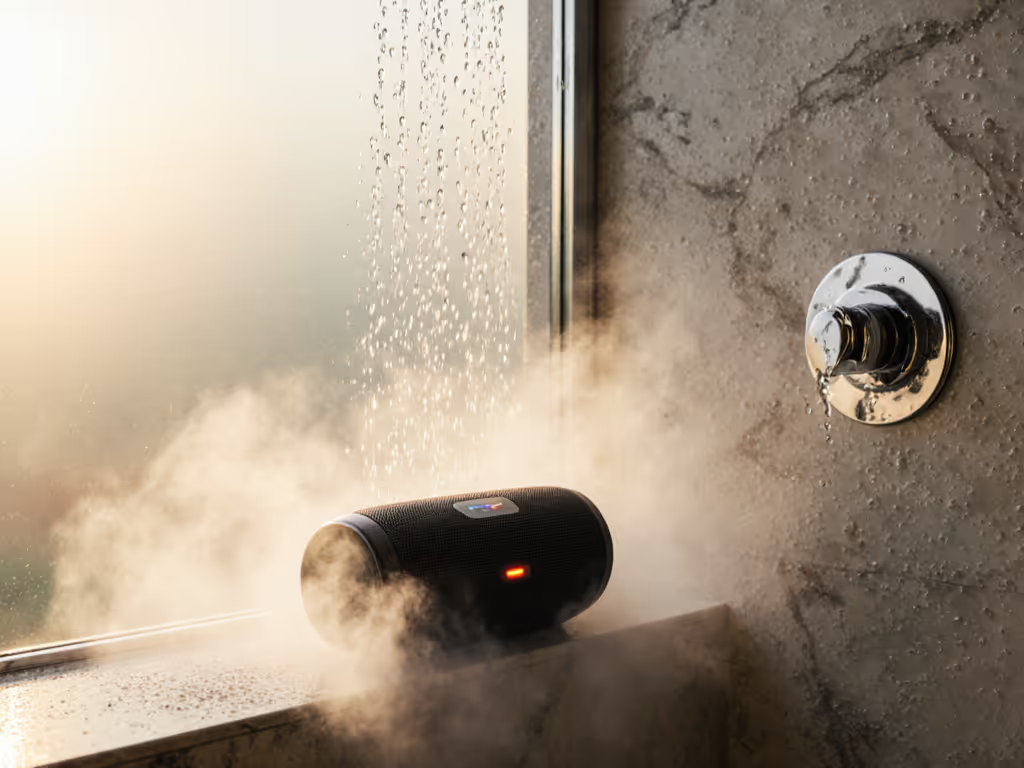
Commercial Bluetooth speakers succeed or fail in your specific environment. A speaker rated IPX4 won't survive daily shower steam; one promising 100 dB but throttling after 2 hours at 85 dB isn't restaurant-ready; a WiFi speaker placed behind a metal kitchen rack will drop regularly. Before committing to 40 units for a hotel or a three-speaker system for a restaurant, rent or borrow one and log its real performance: What does 8 hours at your target volume actually sound like? Does it stay cool? Does it reconnect cleanly after a guest forgets and closes the app? Does the water-resistance rating reflect your kitchen humidity or outdoor weather?
Commercial audio is unforgiving. Guest experience depends on invisibility: the speaker that stays quiet, stays connected, and plays for the entire service. That's not luxury; that's baseline professionalism. Choose speakers with honest metrics, proven durability, and room-to-room or zone-to-zone reliability. Avoid brands that claim specs without field data or omit IP ratings. The cheapest speaker fails visibly; the right speaker vanishes into the ambiance and earns its place every single day.
Final Verdict
For hotels, prioritize WiFi-capable speakers (80 dB at 1m, IPX4 minimum, 10+ hour battery) with fast pairing and reliable multi-point switching. Look for systems where guests can connect without calling the front desk and rooms stay audio-ready all day.
For restaurants and bars, choose speakers with verifiable IP ratings (IP55 or IP65 for kitchen/patio exposure), sustained loudness at 75-85 dB, and zone control, whether through WiFi mesh, DECT, or daisy-chain pairing. Test under real kitchen conditions: humidity, steam, noise. One commercial-grade speaker lasting two years costs less than replacing cheap units every six months while disappointing guests and staff with silence at critical moments.
In both cases, reject marketing promises. Demand field-tested decibels at 1m and 5m, battery endurance measured at your target volume, and honest IP ratings. The speaker that doesn't fail is the one that preserves your reputation and your budget. That's the only metric that matters.