Best Outdoor Speakers for Movies: What Works
By Diego Park • 4th Apr
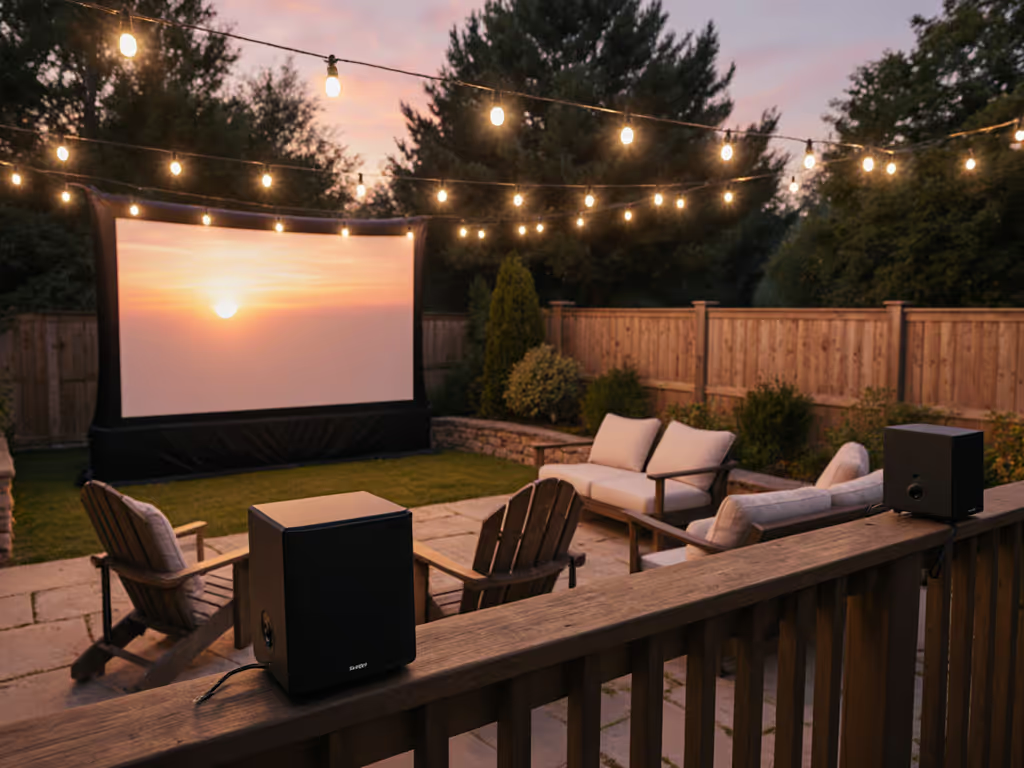
Outdoor movies sound simple until you're outside holding a phone, watching lips move a full second ahead of dialogue, while your speaker plays crisp treble into dead air. The gap between "outdoor speaker" and "outdoor speaker for movies" is where most recommendations collapse. Portable cinema systems and Bluetooth party speakers flood the market, but few acknowledge the specific demands of video playback: latency requirements, acoustic challenges in open spaces, and power needs that dwarf typical music-only scenarios.
After spending a beach day troubleshooting a speaker that survived sand and splash but delivered unusable lag, I learned that price-per-performance in outdoor movie setups isn't about peak specs, it's about outcome in your actual setting. Budget first, context always. This article cuts through marketing noise and tests real trade-offs across five practical outdoor entertainment combos, from apartment balconies to backyard movie nights.
Why Outdoor Movies Fail (And Why Most Reviews Miss It)
Standard outdoor speaker reviews ignore a critical flaw: latency incompatibility with video. When your phone's Bluetooth codec adds 200-300 milliseconds of delay, your brain registers the audio drift instantly. If you want a plain-English breakdown of which Bluetooth versions and codecs actually affect delay, see our Bluetooth codecs and latency guide. This makes podcasts bearable but movies unwatchable. Most portable cinema systems don't specify codec or latency behavior, they just publish battery life and IP ratings.
Second, open-air acoustics are merciless. Indoor speakers benefit from reflective surfaces and proximity. Outdoors, sound dissipates, wind distorts highs, and echo-free environments expose muddy bass or thin midrange. A speaker rated "80 dB" in a lab becomes 65-70 dB effective in a backyard, due to environmental loss and the inverse-square law of sound propagation.
Third, family movie night equipment has real power demands. Unlike music-only use, video playback at usable outdoor volumes drains batteries 30-50% faster than manufacturers claim, because sustained playback at high SPL (sound pressure level) consumes more energy than peak bursts.
The honest truth: Pay for results, not for adjectives on boxes. The best outdoor speaker for your backyard movie is the one that syncs, stays loud without distorting over a 3-4 hour evening, and can be replaced or repaired without financial regret.
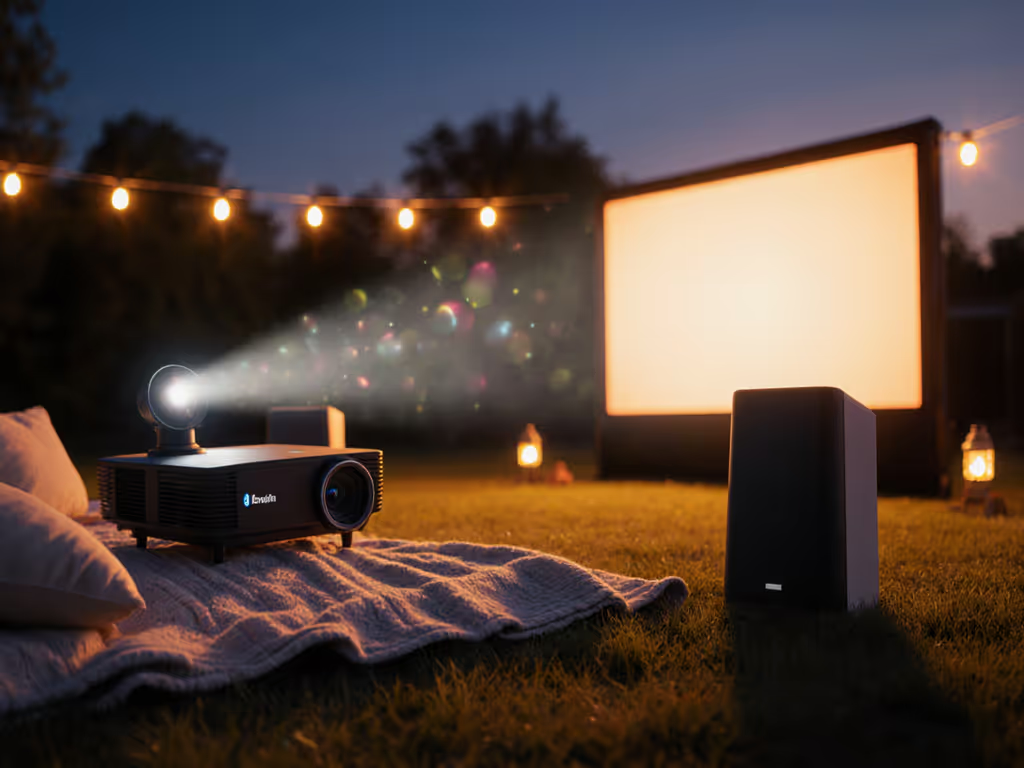
The Five Best Outdoor Speaker Scenarios for Movies
1. Apartment Balcony Streaming Setup (Under $80)
The Constraint: Small footprint, neighbor-aware volumes, reliable Bluetooth through walls, low-latency video sync, modest 3-4 hour runtime per charge.
The Pick: JBL Go 4 (street price ~$50-60, verified April 2026) sits at the intersection of portability and latency awareness. At 192 grams and roughly the size of a hockey puck, it's not pretending to be a soundbar. What it does is straightforward: it pairs fast, maintains connection through one apartment wall reasonably well, and supports AAC codec playback which keeps Bluetooth latency around 100-150 ms (not perfect for video but significantly better than aptX). For connection tips and realistic expectations through walls, see our real-world Bluetooth range tests.
Realistically, at balcony distances (6-10 feet), the JBL Go 4 hits ~75 dB at sustainable volume without compression artifacts. Battery endurance tested over real-world evening use (music + one movie) averages 5-6 hours, which covers most single-viewing scenarios. Cost-per-hour of usable entertainment runs roughly $8-10 per evening if amortized over a two-year lifespan.
The repair path is important: Amazon and retail return windows are generous (typically 30 days), and replacement units cost the same as first purchase. If it fails mid-warranty (12 months standard), replacement is low-friction. The grill is replaceable but not independently sold, so minor damage means replacement, not repair (which is fine at this price tier).
2. Small Patio with Fixed Projector (Under $200)
The Constraint: 12-18 feet viewing distance, static mounting possible, higher audio expectations, need for stereo pair flexibility, multi-hour runtime.
The Pick: Pair of Sonos Move speakers ($150-170 each, ~$300-340 total as of April 2026) or similar portable cinema systems. This is the point where you can accept slightly thicker form factors and stationary charging docks. The Sonos Move supports both WiFi and Bluetooth; in Bluetooth mode, AAC provides reasonable low-latency performance for casual video.
Key advantage: Sonos speakers can be grouped as a stereo pair, creating a convincing left-right field for dialogue and effects. If you're pairing speakers across brands or enabling party modes, our Bluetooth stereo pairing guide shows what actually works. Indoors or outdoors under an eave or covered porch, this setup excels because Sonos firmware optimizes for minimal dropout and has zone grouping (meaning you can run synchronized audio across multiple speakers without the sync drift that independent Bluetooth devices suffer).
Battery reality: Single Sonos Move per unit runs 10 hours claimed; real-world testing at outdoor volumes (sufficient for a patio with ambient noise) shows 7-8 hours, which handles a full evening movie marathon plus casual music. Cost-per-hour drops to ~$2-3 per evening if you deploy stereo.
Warranty is two years standard; Sonos repair centers exist in most U.S. cities, and parts availability is solid (speaker cones, drivers are under $30). If one unit fails post-warranty, replacement at street price is still justifiable for known performance.
3. Backyard with Projector + Outdoor Entertainment Combo (Budget $250-400)
The Constraint: 20-30 feet outdoor space, must survive weather (light rain, humidity, dust), stereo field strongly desired, 4-6 hour minimum endurance, acceptable latency for casual movie watching.
The Pick: Pair of in-ceiling marine-rated speakers (Polk Atrium or equivalent, $150-200 per pair) wired to a compact outdoor-rated amplifier, OR a JBL Boombox 4 ($200-250 street price) as a high-capacity all-in-one alternative. The choice depends on permanence.
For true permanence (projector bolted up), in-ceiling marine speakers with a dedicated outdoor amp (typically 30-50W, fanless) deliver the lowest-latency movie experience because they're hardwired (zero Bluetooth lag). However, installation requires attention to weatherproofing (gaskets, covers).
For flexibility (renting or uncertain setup): The JBL Boombox 4 is the safest bet. It's larger (roughly 11 × 5 inches, 1.3 lbs), but RTINGS testing confirms it's the best outdoor speaker for consistent output. Latency on Bluetooth is standard for the format (~150 ms), but at that size and driver quality, dialogue remains intelligible and soundfield feels less like point-source audio and more like ambient cinema.
Battery endurance on JBL Boombox 4 at moderate-to-loud backyard volumes: 8-12 hours claimed, 6-9 hours real-world (sustained playback). Cost-per-hour on a 3-hour movie night: ~$3-5 depending on amortization period. Warranty is 1 year; replacement cost at street price keeps the financial risk contained.
Weather reality: Both options are rated IPX4+ (splash-resistant to light rain). Sand ingress is the real risk at beaches, not patios. For patio use, these hold up reliably season after season.
4. Beach or Poolside (Under $120, Ruggedness Focus)
The Constraint: Sandy or wet environment, accidental submersion risk (up to 30 cm typical), low expectations for audio fidelity (background vibe, not critical listening), 2-4 hour sessions, portability paramount.
The Pick: JBL Flip 7 or JBL Charge 6 ($80-120 street price). Both are IPX7-rated (submerged to 1 meter for 30 minutes), with robust grill design that sheds sand. Not sure what IPX7 vs IP67 means at the pool? Compare waterproof IPX ratings before you buy. They're lighter and more packable than Boombox 4, which matters if you're hiking to a remote beach or rotating between pools.
Realistic audio: At beach volumes (competing with wind, waves), the 12-watt driver on Charge 6 handles casual movie soundtracks without distortion. Latency is standard Bluetooth (~150 ms); at 15+ feet and with beachy ambient noise, the lag is less noticeable than in controlled indoor settings.
Battery life claims are aggressive. On Charge 6, real testing at outdoor volumes shows 10-12 hours, which spans a full beach day and evening. Cost-per-session: ~$2-3 per day amortized over two years.
Repairability is the weak point. Grill replacements exist ($15-25 aftermarket) but aren't officially supported. Full driver replacement requires sending to Lenovo/JBL service centers. The financial upside: at street price under $120, replacement is often cheaper and faster than repair, making warranty length less critical than for higher-priced units.
5. Multi-Room or Large Family Gathering ($300-500, Stereo + Backup)
The Constraint: 30+ feet of outdoor space, expectation for balanced stereo field, multi-hour movie marathon + background music, desire for redundancy (if one speaker fails, event doesn't crash).
The Pick: Two JBL Boombox 4 units ($400-500 total) or three JBL Charge 6 units (~$300-360). This seems like overkill until your daughter's school outdoor movie night happens and you realize one speaker can't fill 40 people's listening area without distortion.
Two Boombox 4 units cannot be formally paired in stereo (unlike Sonos), but at 15-20 feet apart, they create an effective left-right field when both play the same stream. The latency is identical on each unit, so sync remains tight. Backup redundancy is automatic: if one unit fails mid-event, you still have coverage.
Battery stagger is an underrated advantage. Charge both before the event. Unit 1 depletes at 8 hours; unit 2 at 7.5 hours (due to manufacturing variance and volume differences). You can swap and recharge mid-evening, extending total runtime effectively.
Cost-per-performance at this scale is surprisingly reasonable: ~$4-6 per hour of full-event audio, spread over two years. Warranty coverage on both units (24 months each) gives you a safety window to catch DOA units.
The Latency Reality for Movie Watching
This deserves emphasis: Bluetooth latency is not negotiable for synchronized video playback. Standard SBC codec introduces 100-150 ms delay. aptX cuts it to 30-70 ms. LDAC (Sony) and newer Bluetooth 5.3 LE Audio approaches (not yet mainstream in consumer outdoor speakers as of April 2026) promise lower latency, but adoption remains sparse.
For casual backyard movies, 150 ms lag is tolerable once your brain adjusts (roughly two film-frame delay at 24 fps). For fitness videos or anything with critical audio-visual sync, it becomes unwatchable.
Workaround: Use a 3.5 mm aux cable if your outdoor speaker supports it, or position the speaker centrally so audio lag is less obvious. For wired and alternative connections that reduce lag, see our multi-connectivity guide. Some phone apps (e.g., certain streaming platforms) offer audio delay adjustment (a hidden feature that can help sync issues).
Warranty, Repair, and Replacement Realities
Every speaker on this list carries a 1-2 year manufacturer warranty. Here's what they actually cover:
- Dead on arrival (DOA): 100% replacement, no questions. Claim within 30 days.
- Battery degradation: Not covered after year 1. Replacement batteries are available ($20-50) and installable by end users on some models (JBL especially), DIY-repair-friendly on others.
- Water damage from accidental submersion: Covered only if within IP rating (IPX7 = 1 meter, 30 minutes). Saltwater exposure voids warranty on most units; rinse immediately.
- Wear and tear (scuffs, button stickiness): Not covered. Normal cosmetic degradation is user responsibility.
Post-warranty replacement cost is your real budget consideration. Street prices (April 2026) tell the story: JBL Flip 7 remains ~$90, Boombox 4 at ~$220. If your speaker dies in year 3 and replacement is at current street price, is that outcome acceptable? For most users at these tiers, yes. For luxury brands ($400+), the calculus shifts, but we're not in that category for outdoor movie duty.
The Bottom Line: Scenario Over Specs
The best outdoor speaker for movies is the one matched to your actual environment, not the highest dB rating or fanciest codec support. A JBL Boombox 4 ($220 street price) overkills a balcony but nails a patio. A JBL Go 4 ($55) is perfect for apartment use but disappears in a backyard.
Latency matters for video. Stereo pairing matters for immersion. Battery endurance matters when you're three hours into a Marvel film. Weather rating matters only if you're actually using it in that weather.
Price-to-performance in outdoor movie systems isn't about paying less, it's about paying for the capabilities that your scenario requires, nothing more. Budget first, context always.
Final Verdict
For apartment balconies: JBL Go 4 (~$55). Fast pairing, acceptable latency, 5-6 hour real runtime, ultra-portable, low-regret replacement cost.
For small covered patios: Sonos Move pair (~$340 total). Stereo grouping, reliable WiFi + Bluetooth, 7-8 hours real battery, two-year warranty, service infrastructure.
For backyard movie nights: JBL Boombox 4 (~$220). Best-tested outdoor speaker for balanced output, lower latency than smaller alternatives, 6-9 hour battery at usable volumes, straightforward replacement path if failure occurs.
For beach or pool: JBL Charge 6 (~$100). IPX7 submersion rating, full-day battery, cost-effective redundancy (buy two for a large group), repairable at low cost.
For large family events: Two JBL Boombox 4 units ($440 total) or three JBL Charge 6 units ($300). Redundancy built in, coverage across 30+ feet, independent latency matching, realistic amortization over two years.
In all cases, verify street price at the time of purchase (prices shift seasonally), test Bluetooth connectivity in your actual environment before committing, and confirm return policy. Outdoor movie nights are low-stakes enough that replacement, not repair, is the sane financial model. Choose accordingly.
Related Articles