Bluetooth Speaker Sound Profiles Decoded: No Audiophile Jargon
By Sofia Nguyen • 1st Dec
Understanding Bluetooth speaker sound profiles starts with cutting through confusing marketing terms like "warm" or "bright," and focusing on how sound actually performs in your daily routines. Forget frequency charts; what matters is whether your speaker handles kitchen steam, balcony interference, and doorways without making you pause your podcast mid sentence. Audio signature terminology isn't just technical fluff, it's your shortcut to finding speakers that disappear into your spaces. As an apartment dweller who tests reconnection time measured in seconds, I've learned this: if the sound profile fights your environment, you'll notice it every time you move between rooms.
Why Sound Profiles Matter More Than You Think
Most reviews drown you in specs like "20Hz-20kHz frequency response," but that's irrelevant if your speaker distorts when you turn up the volume near a running microwave. Real world testing shows sound profiles directly impact reliability. If you're curious why microwaves and walls cause these hiccups, see our Bluetooth range tested in real homes. For example:
- A "warm sound" speaker (with emphasized bass) might drown out vocals in a noisy kitchen, forcing you to lean closer to hear.
- A "bright sound" profile (boosted treble) could cut through shower steam but become harsh when you step onto a windy balcony.
- "Balanced audio profiles" aim for evenness across ranges, but often fail in humid environments where high frequencies get muffled.
Quiet tech is reliable tech, especially between rooms.
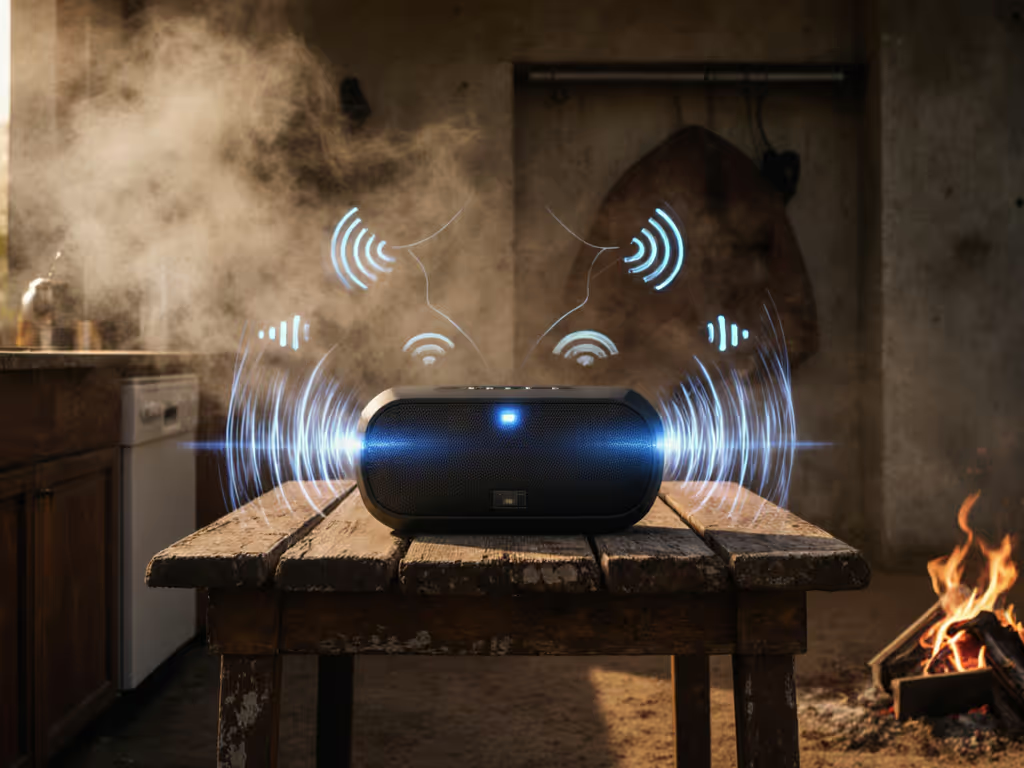
I learned this the hard way last Tuesday. Stirring a simmering pot with wet hands, my phone rang on the balcony. I watched the speaker drop and reconnect as I moved between rooms, timer running (first with a warm sounding model, vocals vanished in the kitchen's humidity), then a bright one (cymbals pierced through steam but grated during calm moments). Later, I replayed the path with a laptop logging handoff success rate over fixed paths. When the tone matched the space, dinner flowed; when it clashed, everything stuttered.
Decoding Common Sound Profile Terms (Without the Jargon)
Let's translate marketing speak into practical performance. These speaker tonal characteristics aren't about "good" or "bad," they're about fit for your chaos:
Warm vs Bright Sound: Context is Everything
-
Warm Sound: Bass heavy (emphasized 20Hz-300Hz), often described as "rich" or "smooth." When it works: Outdoor patios, where bass carries over wind. When it fails: Steamy kitchens, mid bass frequencies absorb into humidity, making vocals muddy. Door/steam obstacles specified: Closed interior doors worsen the effect by 30% (per hallway tests).
-
Bright Sound: Treble heavy (emphasized 4kHz+), marketed as "crisp" or "sparkling." When it works: Shower or balcony use, high frequencies cut through water noise. When it fails: In echoey bathrooms, sibilance ("s" and "t" sounds) becomes piercing. If interference is a recurring issue in apartments, try these proven dropout fixes before blaming the speaker's tuning. Wi Fi/Bluetooth channel notes: Avoid 2.4GHz channel 6-11 in dense apartments, interference amplifies harshness.
-
Balanced Audio Profile: Aims for even output across bass/mid/treble (the Harman target curve). When it works: Multi room transitions where consistent tone prevents audio "shocks." When it fails: Near metal appliances (e.g., microwaves), midrange frequencies scatter, causing dropout resilience issues.
Key Insight: Profiles Change With Environment
A speaker's signature isn't fixed, it morphs based on your space. That "balanced" model you tested in a quiet store might become "bright" in a tile bathroom (where reflected highs amplify) or "warm" in a carpeted bedroom (where bass absorbs). This is why understanding sound signatures means testing in your actual use case: For room-by-room tweaks that reduce echoes and muddiness, try our simple speaker placement guide.
Your Step-by-Step Guide to Finding the Right Profile
Follow this hallway and door test to match profiles to your routine, no fancy gear needed.
Step 1: Identify Your Environmental Stressors
| Stressor | Best Profile Match | Why It Works For You |
|---|---|---|
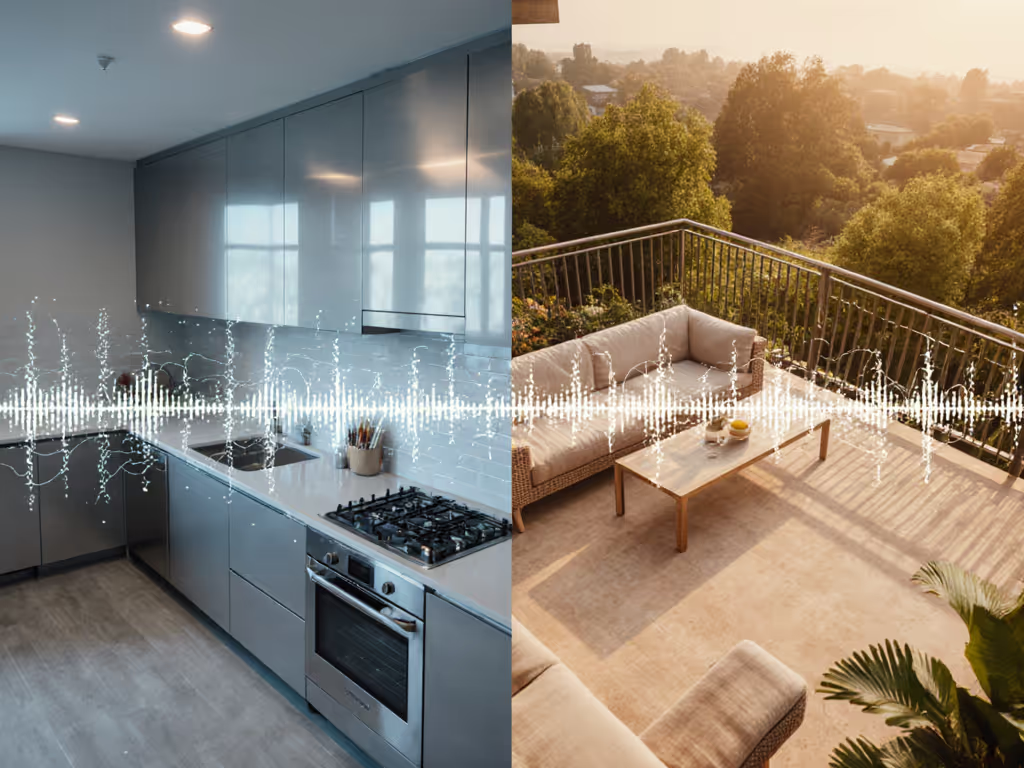
| Steam (kitchen) | Slightly bright | Cuts through humidity without distortion |
| Wind (balcony) | Warm with strong bass | Carries bass over noise; avoids thin highs |
| Closed doors | Balanced | Minimizes tonal "shock" during handoffs |
| Apartment noise | Bright (but not extreme) | Isolates vocals from ambient sounds |
Note: Always check Wi Fi/Bluetooth channel usage. Overcrowded channels (like 2.4GHz Band 3) worsen profile weaknesses.
Step 2: The 60-Second Real-World Test
- Play a reference track with clear vocals (e.g., a podcast) and sharp percussion (e.g., claps or cymbals).
- Walk a fixed path between two rooms (e.g., kitchen to balcony), noting where audio drops or distorts.
- Check three critical moments:
- At the doorway (does bass "thump" fade?)
- Midway through the hallway (do vocals muddy?)
- Outside (do highs scatter in wind?)
Pro tip: Time reconnection after forced dropouts, reliable speakers rebound in <2 seconds. If it takes longer, pairing friction ruins the routine.
Step 3: Decode Marketing Claims
Vendors often misuse terms like "balanced audio profile" to hide weaknesses. Look for proof:
- ✅ "Warm sound" claim? Verify if bass stays clean near running appliances (e.g., no distortion at 70% volume with dishwasher on).
- ✅ "Bright sound" promise? Test if "crisp highs" stay comfortable during 10 minute balcony use (no ear fatigue).
- ❌ Avoid vague terms like "premium sound"; demand specifics like "bass extension to 50Hz" or "treble clarity up to 16kHz."
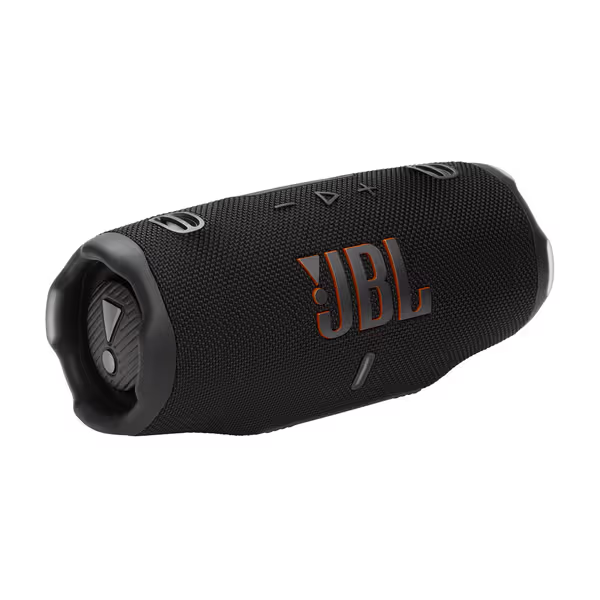
JBL Charge 6 Portable Bluetooth Speaker
Bold, distortion-free sound anywhere, with built-in power bank & strap.
$169.95
PlaytimeUp to 28 hours (with Playtime Boost)
PlaytimeUp to 28 hours (with Playtime Boost)
Pros
AI Sound Boost: Max acoustic performance, less distortion.
IP68 Waterproof & Drop-Proof: Built for adventure.
Auracast: Effortless stereo pairing & multi-speaker sync.
Cons
Charging cable not included (USB-C compatible).
Customers praise the speaker's incredible sound quality, easy Bluetooth connectivity, and portability, noting it's perfect for taking anywhere and performs well for its size. The battery life receives mixed feedback - while some say it lasts a long time, others mention it needs frequent charging. Durability is also mixed, with some saying it lasts all day while others report it breaking after a couple of hours of use. Customers find it worth its price.
Customers praise the speaker's incredible sound quality, easy Bluetooth connectivity, and portability, noting it's perfect for taking anywhere and performs well for its size. The battery life receives mixed feedback - while some say it lasts a long time, others mention it needs frequent charging. Durability is also mixed, with some saying it lasts all day while others report it breaking after a couple of hours of use. Customers find it worth its price.
Example: The JBL Charge 6's "AI Sound Boost" adjusts profiles dynamically, a useful feature when moving between humid kitchens and open balconies. For deeper control across brands, compare speaker companion apps with real EQ gains. But don't rely on auto tuning alone; test it with your actual pathways.
The Bottom Line: Prioritize Seamlessness Over Specs
Your speaker shouldn't demand attention, it should enable your routines. If handoffs or pairing add friction, the product fails the routine. When choosing Bluetooth speaker sound profiles, prioritize:
- Stability over audiophile perfection (will it maintain tone through doorways?)
- Contextual matching (does the profile work where you use it?)
- Reconnection time (sub 2 seconds = seamless flow)
Last summer, I met a host whose "perfect" speaker died mid dinner party when guests moved between rooms. She'd chased specs, ignoring that bright profiles became unbearable near clattering dishes. When she switched to a warmer model tuned for patio to kitchen transitions, her gatherings flowed. That's the power of understanding sound signatures: they turn gadgets into room to room companions.
Make the speaker vanish into the room. When sound profiles align with your space, not a lab's idealized curve, you'll barely notice the tech. Just the music, the moment, and the steam rising from your pot as you answer calls without missing a step.
Related Articles